

Operational risk examples in the workplace—and where today’s security programs break down

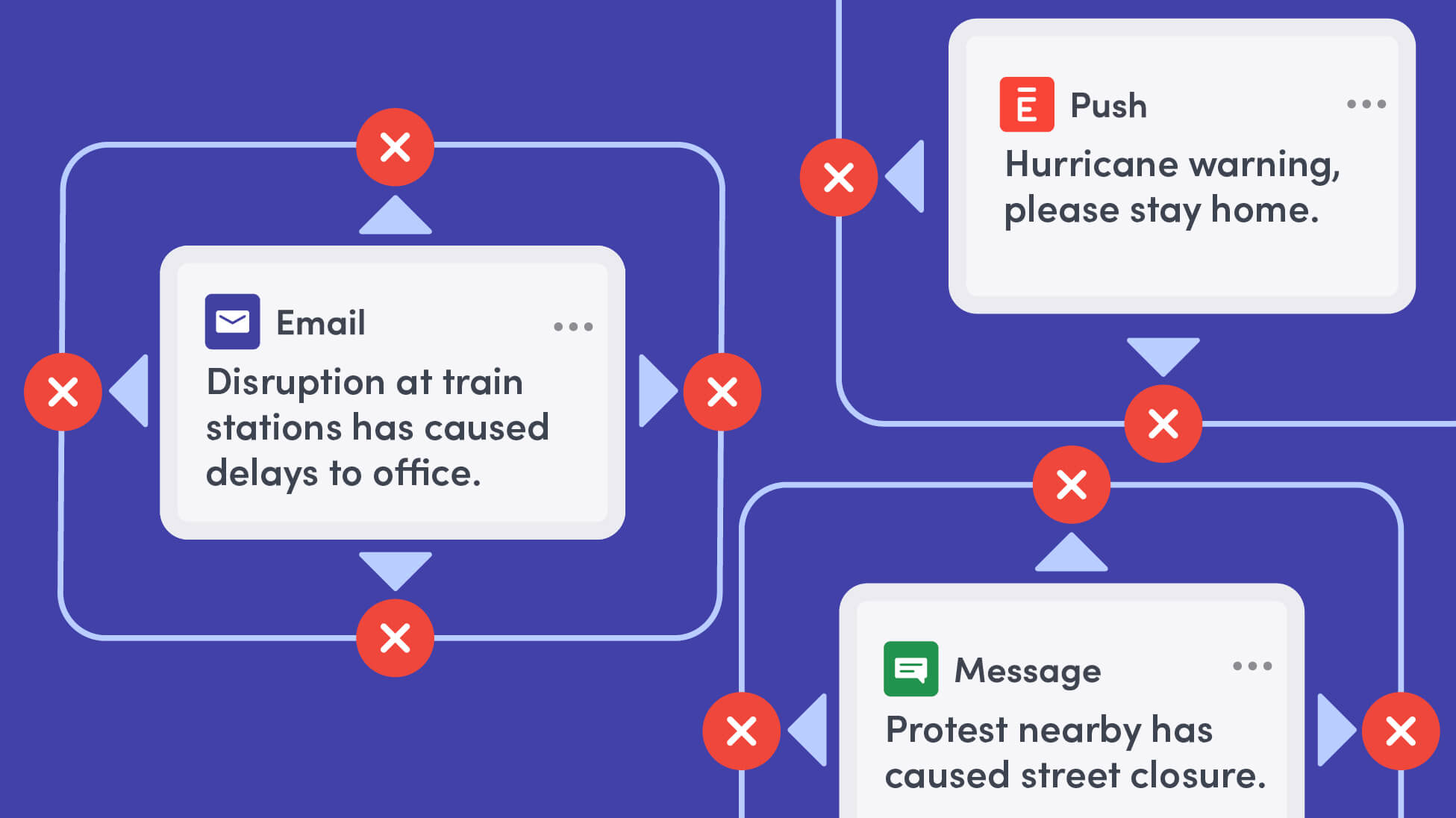
Most workplace security issues aren’t caused by a single major failure. They happen when everyday processes become inconsistent, unclear, or difficult to follow. That leads teams to adapt, create new workarounds, and gradually form small gaps between policy and practice.
The problem is that those gaps often stay hidden until something goes wrong. Below, we’ll explore common operational risk management (ORM) examples for workplace security teams and how organizations can address them before they grow into larger issues.
What is operational risk?
Operational risk is the threat of disruption or loss caused by failed processes, human error, system failures, or external events.
For security and compliance leaders, operational risk often looks like:
- An evacuation plan that no longer reflects current occupancy
- A visitor management system that doesn’t connect to incident management
- Threat feeds that generate too much noise to monitor consistently
- Compliance requirements your current systems can’t easily demonstrate
The stakes are rising on two fronts. Regulatory requirements like CMMC, NIST 800-171, ITAR, and SOC 2 are raising the bar for how organizations document and demonstrate controls. At the same time, workplaces are dealing with more operational disruption from severe weather, protests, transit outages, and other external events that can affect employee safety and business continuity.
What are the most common examples of operational risk?
1. Process failures during emergencies
Your emergency response plan was documented, approved, and filed. Then, the office expanded, headcounts shifted with hybrid work, and contractors became a regular presence onsite. When there’s an emergency, the plan no longer reflects your reality.
Most organizations treat emergency planning as a compliance artifact. The plan gets built, the box gets checked, and it’s revisited annually, if at all.
Emergency plans need to be tied to live data: current headcount, active visitor records, real-time occupancy. Teams should be relying on a system, not a document.
{{protip-1}}
2. Technology dependencies and single points of failure
Visitor management is from one vendor. Incident management from another. Access control runs on a third. None of them share data in real time.
During a security event, you’re toggling between systems to answer basic questions: Who’s in the building? Have all employees been accounted for? Are there visitors who haven’t been reached?
The risk isn’t necessarily in any one system, but the seams between them. Technology dependencies should be mapped end to end to identify where the gaps slow coordination. But often, those gaps only become visible once a real incident exposes how disconnected the systems actually are from one another.
3. External threat exposure across multiple sites
A severe weather system is developing near one office. A protest is forming two blocks from another. A transit disruption is affecting a third. Each is a real risk, but the signals are coming from different sources, in different formats, at different times.
You have access to information, but the challenge is determining which signals are credible, relevant, and actionable before teams lose time chasing noise.
Without a way to correlate, score, and deduplicate overlapping feeds, most of it becomes noise. The result? A reactive security posture where the window for proactive action has already closed.
Teams must move from reactive alerting to proactive awareness to gain a single consolidated, scored view of risk across all locations.
4. Visitor and contractor blind spots
A security incident occurs while contractors are onsite. They’re not in your employee directory and they signed in on paper. You’re not sure where they were or whether your team has accounted for them.
You can’t demonstrate that only authorized individuals accessed a restricted area during a specific window, which makes this a serious problem if you were audited.
For organizations under ITAR or CMMC, this gap is considered a compliance exposure. Visitor data needs to be included in security posture, with records that are accessible during an emergency and auditable after one.
5. Human error in high-pressure moments
A responder sends a notification to the wrong distribution list. A floor warden marks everyone as evacuated before confirming it. A manual headcount comes back wrong.
Each of these operational risk examples are failures of process, specifically, reliance on manual steps when speed and accuracy are both required.
To reduce this risk, teams need to reduce the manual steps that introduce error under pressure. This includes automated notification triggers, headcount tracking, and status updates. Human judgment should be reserved for decisions that actually require it.
6. Regulatory and compliance gaps
An auditor asks for complete access control logs from the past twelve months. The logs exist, but they’re spread across three systems, some records are incomplete, and producing a clean report requires significant manual work.
This is compliance in theory, not execution.
Compliance gaps grow from shortcuts. A workaround here, a deferred upgrade there. To reduce this risk, organizations should build compliance readiness into operational processes before an auditor asks, not after.
7. Insider risk and access control failures
An employee transfers to a new department. Their access permissions aren’t updated. Six months later, they still have credentials for systems and spaces their current role doesn’t require. In a regulated environment, that’s an access control failure.
When physical security and IT systems aren’t connected, teams have to review access manually, on a case-by-case basis. In a busy environment, this becomes easy to deprioritize, resulting in access creep: permissions nobody intended and no one is actively monitoring.
Access should be granted based on current role, reviewed regularly, and revoked promptly when roles change.
8. Supply chain and third-party vendor risk
A critical software vendor goes down. A facilities contractor has a data breach. A cloud provider experiences an outage that takes your emergency notification system with it. In each case, the disruption lands squarely on your operations.
Third-party risk is easy to underestimate because the dependency is often only visible when it fails. Security teams tend to focus on systems they directly operate, not the vendors and services those systems rely on.
Critical vendor dependencies should be mapped the same way internal ones are mapped. Teams should know which third parties touch their safety-critical systems, what exposure looks like if those systems go down, and whether their contracts include the right notification and recovery obligations.
9. Physical security gaps during high-occupancy events
All-hands meetings, town halls, client events, and recruiting days all have one thing in common: your building fills up well beyond its normal operating headcount. When this happens, visitor check-in can be rushed and it’s not uncommon for people to open doors. Emergency plans, built around a typical day onsite, weren’t designed for these circumstances.
High-occupancy events create concentrated risk. More people means longer evacuation times, harder headcounts, and more variables for a floor warden to manage. If emergency protocols don’t account for it, it leads to a gap in security.
Before any large event, teams should confirm that visitor records are complete, floor warden assignments reflect actual attendance, and emergency notification reach covers guests and contractors, not just employees.
Where most ORM programs break down at the enterprise level
These operational risk examples become more difficult to manage at enterprise scale.
Why? Fragmentation. When your tools don’t share data, your teams don’t share visibility. What security sees, compliance doesn’t. What the facilities team knows, security can’t access in time to act on.
This is especially common for multi-site organizations. Risk at one location can be invisible to leadership until it escalates, and when it does, the response is slower and less coordinated than it should be. Here are some patterns that show up consistently in programs that struggle:
- Periodic assessment vs. continuous monitoring. Most programs are built around scheduled reviews, such as quarterly risk assessments, annual audits, tabletop exercises. These are valuable, but they’re only snapshots. Risk exists between reviews, and the gaps between them are where exposure tends to grow.
- Siloed ownership. When different teams own different pieces of workplace safety (IT owns the notification system, facilities owns physical access, HR owns employee records) nobody has the full picture. Incidents fall into the gaps between ownership boundaries.
- Treating compliance as the finish line. Passing an audit is not the same as managing risk effectively. Programs that optimize for compliance documentation rather than operational readiness tend to discover this the hard way.
How do you build controls that actually hold up?
Operational controls fall into three categories:
- Preventive controls stop a risk event from occurring. Access restrictions, pre-screening processes, and automated approval workflows are examples.
- Detective controls identify when something has gone wrong. Audit logs, anomaly alerts, and regular access reviews fall here.
- Corrective controls address problems after they’re identified. Incident response procedures, remediation workflows, and post-incident reviews are corrective.
Most physical security programs have some of each. The problem is that controls get designed once and then assumed to be working, rather than tested against current conditions. They’re not reviewed to see whether they’re actually being followed in practice.
Let’s look at a few principles that make controls more durable, and how to execute them:
{{protip-2}}
How do you move from reactive alerts to proactive risk awareness?
Most incident management systems work the same way: something happens, someone decides it warrants an alert, the alert goes out. By then, the window for proactive action has closed. The question has shifted from "how do we prevent exposure" to "how do we manage it."
The security teams that handle this best aren’t just faster at sending alerts. They’re operating earlier in the timeline, identifying risk before it reaches their people. That requires consolidated threat signals, a way to filter noise, and visibility across every site in one place.
For multi-site organizations, that’s the difference between a security team that’s always catching up and one that has enough lead time to act deliberately.
What should a practical ORM checklist cover?
Use this as a quick self-assessment to identify your highest-leverage gaps.
Risk identification
- Operational risks are documented across all sites, not just headquarters
- Risk identification includes third-party and vendor dependencies
- Your risk inventory is reviewed and updated when operations change significantly
Controls and processes
- Emergency plans reflect current occupancy, visitor processes, and site layouts
- Controls are tested under realistic conditions, not just reviewed on paper
- Access permissions are reviewed regularly and revoked promptly when roles change
Technology and data
- Key systems (visitor management, incident management, access control) share data or integrate
- You can produce complete access logs for compliance purposes without significant manual effort
- Threat monitoring covers all active sites, not just primary locations
Visibility and oversight
- Security and compliance teams have a shared view of risk, not separate dashboards
- Escalation paths are clear and tested
- Post-incident reviews feed back into your risk program in a structured way
If you identified gaps in the technology and data section, that’s usually the highest-leverage place to start. Siloed systems create siloed risk awareness, and most of the other gaps on this list are harder to close when your data isn’t connected.
—
Operational risk shifts as your organization grows, as your toolset changes, and as the threat environment evolves. The goal isn’t to eliminate risk. It’s to see it clearly, own it explicitly, and respond faster than it can compound.
For most security and compliance teams, the starting point is the same: close the data gaps between your systems, make sure your emergency plans reflect operational reality, and build monitoring that doesn’t depend on someone manually checking something on a schedule.
Ready to improve operational risk management and emergency response across your organization? Learn about Envoy for emergency management.
Our guide, the Workplace emergency action plan, is a practical resource to help you build, test, and strengthen an emergency response plan.
See how security leaders are thinking about closing the gaps between people, access, and emergency systems in our webinar with the Senior Physical Security Manager at the Chan Zuckerberg Initiative.
Read more

In this guide, we’ll break down how cloud digital signage works, how it compares with on-premise signage, cost factors, and what to look for in a solution.

Learn how to support ITAR compliance with visitor screening, access approvals, onsite controls, and records that document each visit.
Compare leading mass notification vendors, their best-fit use cases, and key tradeoffs. Learn what to evaluate before choosing a system.
New Envoy research reveals where physical security gaps emerge and whether organizations can prove their controls are working.
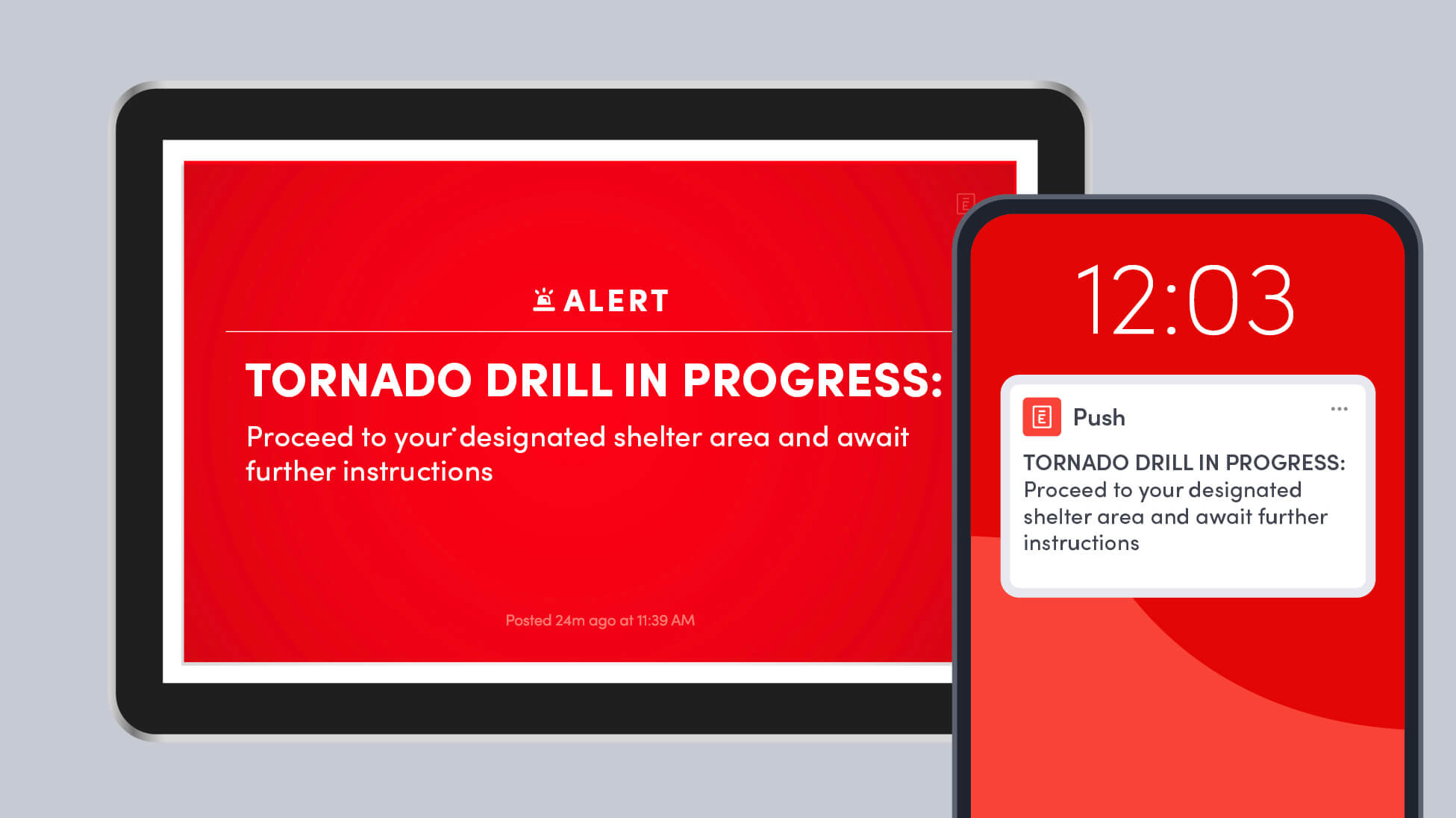
Learn how to run a workplace tornado drill, choose safer shelter areas, account for everyone onsite, and improve your emergency response plan.
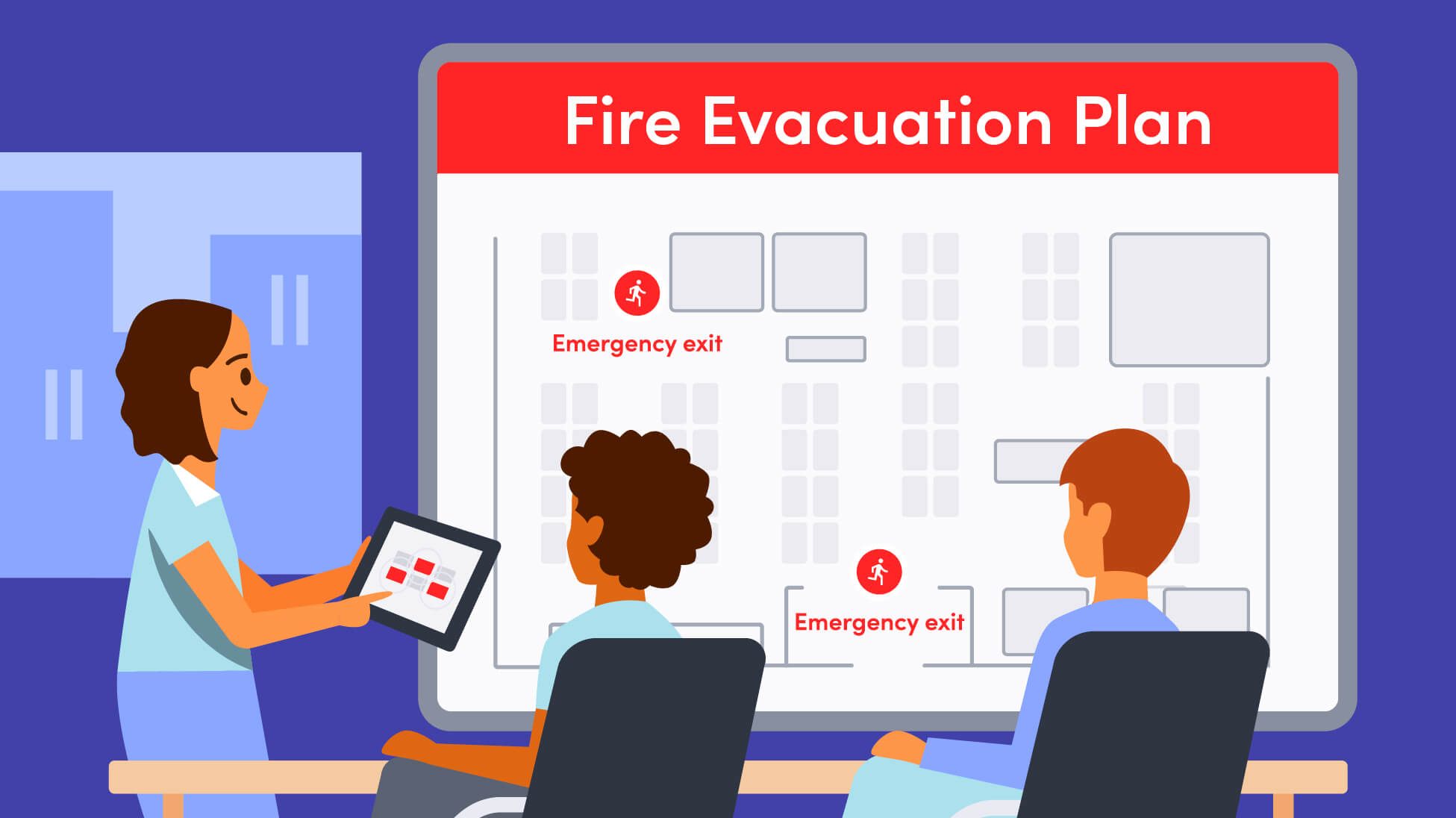
A strong fire evacuation plan goes beyond exit routes. Here’s how to plan for alerts, muster points, accountability, response roles, accessibility, and everyone who may be onsite.