

A security leader's playbook for emergency-ready security and closing critical gaps


Most emergency plans are built around employees. But employees aren't the only people on site when something goes wrong. Visitors, vendors, grantees, contractors, founders, and guests are all in the building too, and they're often outside the systems your security team relies on to account for everyone.
That gap is exactly where the response breaks down.
In a recent Envoy webinar, Kristine Banda, Senior Physical Security Manager at the Chan Zuckerberg Initiative, sat down with Bridget Scott Akinc, VP of Strategy and Enablement at Envoy, to talk about how her team closes that gap. Kristine has spent years in physical security, including nine years at Meta, and now leads a security program that spans office and lab environments. Here's what stood out.
Gap 1: Visitors don't disappear in an emergency. They become invisible.
When an incident hits, the instinct is to think about employees first. Everyone else fades into the background.
"You often think of employees when an incident happens, but you kind of forget that you have visitors and guests and people here for different reasons, so they're not really at the top of your mind. It's employees. So they basically become invisible, in a sense."
Visitors usually don't badge in. If they're not in a system, there's no reliable way to know they're there, where they are, or whether they made it out. For a team that has to confirm every single person is safe, that's a serious blind spot.
The fix is presence data that covers everyone. When a check-in and check-out system tracks who arrived, why they're there, and when they left, the picture stays accurate. People on leave or working from home don't get pulled into an alert they don't need. Visitors who left hours ago aren't counted as missing.
Gap 2: Manual lists cost you minutes you don't have.
The hardest moments in an evacuation come from bad data. Kristine described the panic of chasing someone who was never actually at risk.
"It's that panic time where you see Joe Smith is still here, but Joe Smith left 2 hours ago, and you're panically looking for this person, and you're trying to account for this person."
Every minute spent verifying a stale list is a minute not spent coordinating with first responders or helping people who genuinely need it.
"Time is really of the essence in an incident. You don't have that time. You don't have that time to go to a manual log, or to go and do a checklist type of thing. You really have to make decisions quickly."
Accurate, real-time data is what lets a team move fast and trust what they're acting on.
Gap 3: A notification is the start, not the finish.
Sending a message is the easy part. Managing an incident from open to close is the real work.
"Sending a message is easy. Evacuate the building, go over here. But it doesn't just stop at that. It continues on from beginning to end."
For Kristine's team, that means more than "there's an emergency, evacuate." It means directing people to a single assembly point so an incident commander can count heads and report back to the SOC. It means two-way communication: are you okay, do you need help, mark yourself safe. That closure is the difference between hoping everyone got out and knowing they did.
It's also why Envoy moved from notification to full incident management. The job isn't done when the message goes out. It's done when every person is accounted for.
Gap 4: Access control is the foundation, not a footnote.
It's easy to treat check-in data as administrative. Kristine sees it as the base layer of the entire program.
"People don't really think that, oh, you know, access control, who's in, who's out, who's there, doesn't really do anything. No, it's pretty much the basis of what we do, and where we start, and then where we're gonna go."
That foundation does double duty. In the moment, it tells officers where to go and which rooms to clear. Over time, it shows patterns: which buildings get busy at lunch, when lab spaces are at capacity, where staffing needs to flex. In lab environments with compliance requirements and occupancy limits, that visibility lets the team get ahead of problems instead of reacting to them.
Pre-registration is a big part of how CZI keeps that data clean. Knowing who's coming, who their host is, and where they'll be turns a chaotic moment into a guided one.
Gap 5: AI helps. Let the humans decide.
Kristine is clear-eyed about where AI fits in surfacing anomalies a person might miss and connecting a camera alert to the context of who's on site and why.
"AI thinks ahead of us, and it puts things in front of us, and we're like, oh, we didn't think of that, let's deep dive into that."
But she doesn't hand over the decision. Her team runs tabletop exercises, reviews what the system flags, and pressure-tests whether it actually makes sense for their environment. AI improves visibility and speed. The judgment stays human.
"You don't have to dig through multiple systems, and get multiple reports and try to put everything together and figure it out yourself. AI's not perfect, but it'll give you some information, and then you go back, and we'll sit down as a team and do some tabletops and go through the information together."
The takeaway: build for tomorrow, not just today.
Security gets treated as event-driven, with investment showing up only after a breach. Kristine makes the case for the opposite, and her advice doubles as the throughline of the whole conversation.
"Think smarter, not harder. Make it easy on your teams, and provide tools for your teams so their job, they can get their job done. We want a single place where we can get everything that we need, instead of trying to pull it from different sources."
Because change is inevitable, and the systems you choose now need to scale with you.
—
People, access, and emergencies: How security leaders are closing the gaps between systems
Kristine and Bridget cover much more, including mustering, compliance and audit readiness, executive protection, and where physical security is heading next.
Watch the on-demand webinar →
.png)
Read more
Compare leading mass notification vendors, their best-fit use cases, and key tradeoffs. Learn what to evaluate before choosing a system.
New Envoy research reveals where physical security gaps emerge and whether organizations can prove their controls are working.
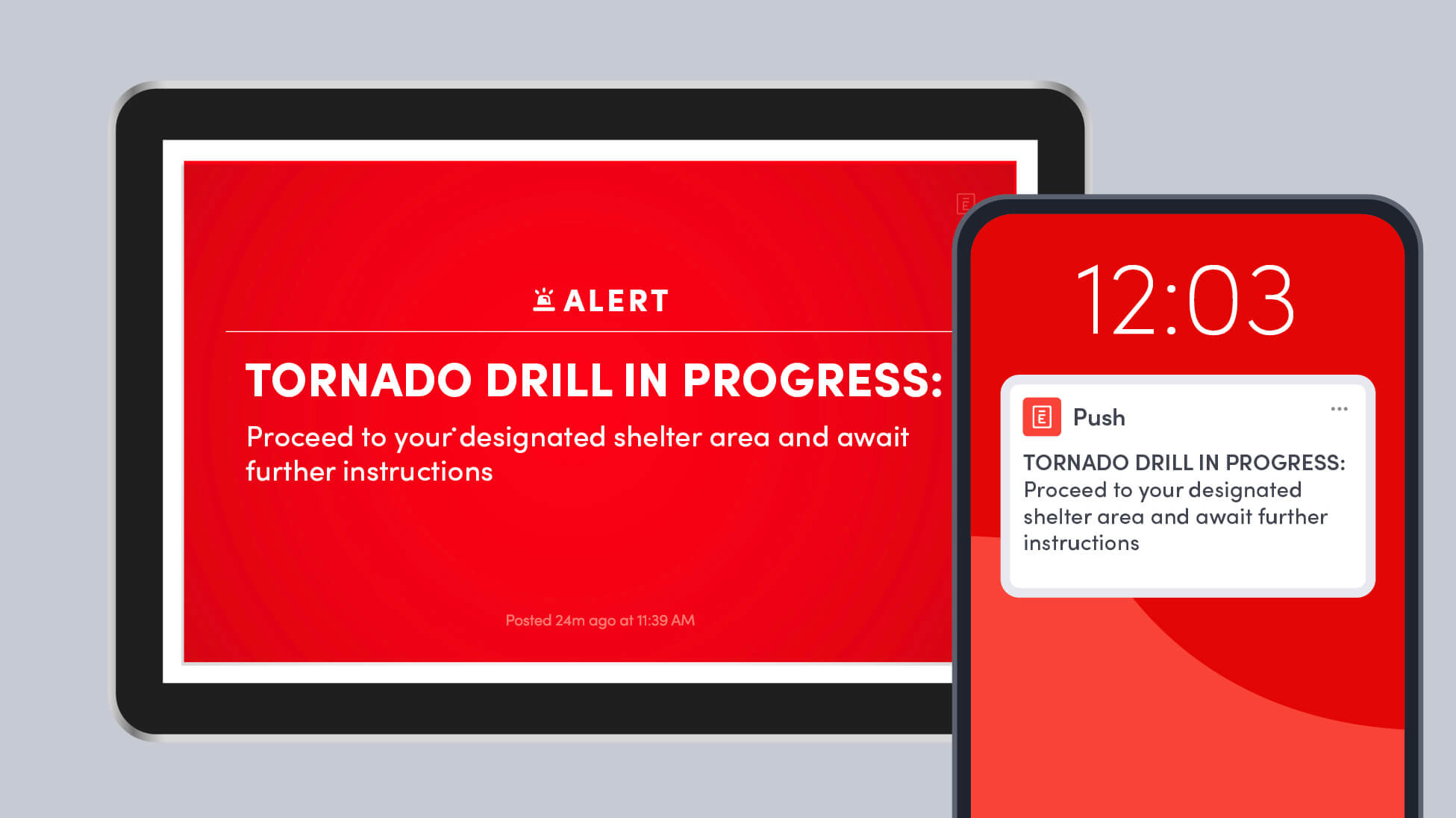
Learn how to run a workplace tornado drill, choose safer shelter areas, account for everyone onsite, and improve your emergency response plan.
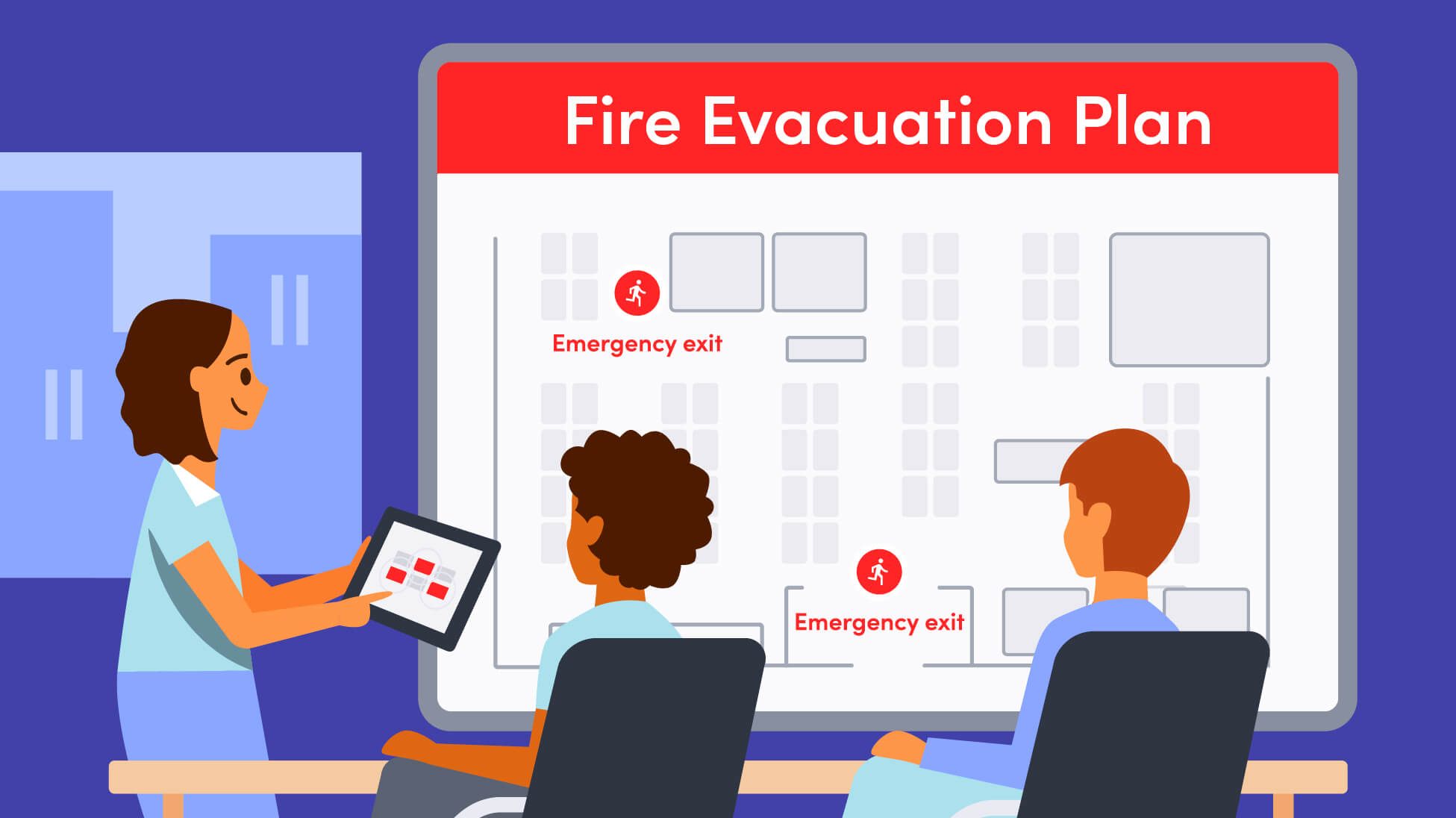
A strong fire evacuation plan goes beyond exit routes. Here’s how to plan for alerts, muster points, accountability, response roles, accessibility, and everyone who may be onsite.
This guide breaks down the key response roles every workplace should define, from incident leads and wardens to communications, accountability, and backup coverage.
Active shooter drills should build preparedness without creating unnecessary fear. Here’s how to test communication, decision-making, accountability, and response roles with a safer, more thoughtful exercise.