

Workplace safety in crisis: 74% of workers avoid work due to risk

Three out of four U.S. workers have skipped going into work due to a hazardous condition.
Not occasionally. Not in extreme circumstances. In a single survey of 1,000 employed Americans, 74% reported making the choice to avoid work entirely because of a threat—whether weather, civil unrest, security concerns, or infrastructure failures.
That number alone should shift how organizations think about workplace safety. But the research that produced it reveals something more troubling: the gap between the threats workers face and the support they receive.
The current state: what the data shows
In July 2026, Envoy conducted research surveying 1,000 U.S. adults employed at physical locations. The findings paint a picture of a workforce navigating genuine safety concerns—and often doing it alone.
The scale of the problem extends across the spectrum:
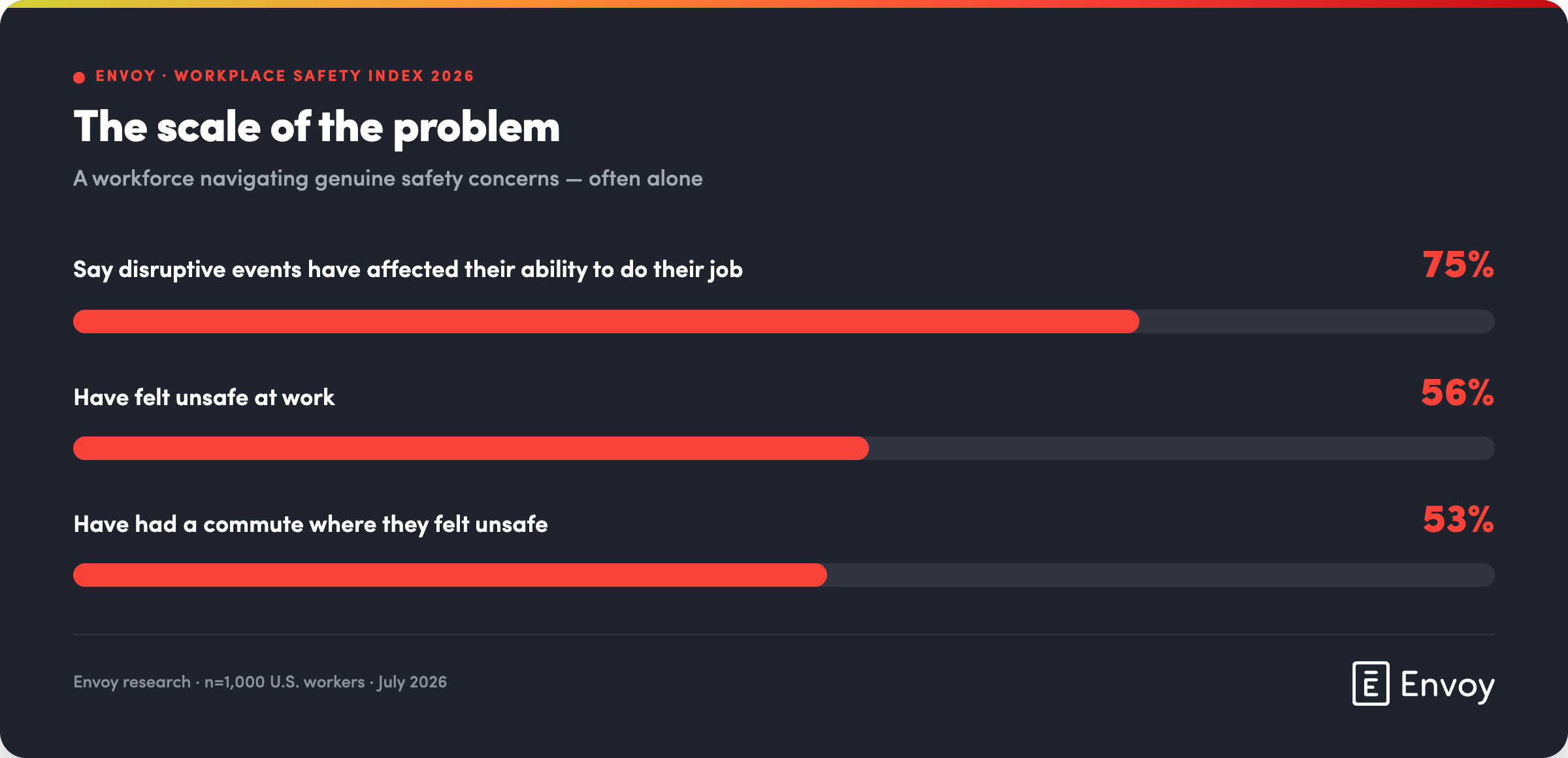
- 56% have felt unsafe at work — meaning more than half the working population has experienced a genuine safety concern while on the job.
- 53% have had a commute where they felt unsafe — the walk or drive to the office has become a risk vector.
- 75% say disruptive events have affected their ability to do their job — from weather delays to forced closures to security incidents.
What's actually causing workplace anxiety?
When asked what types of hazardous conditions prompted them to avoid work, respondents cited:
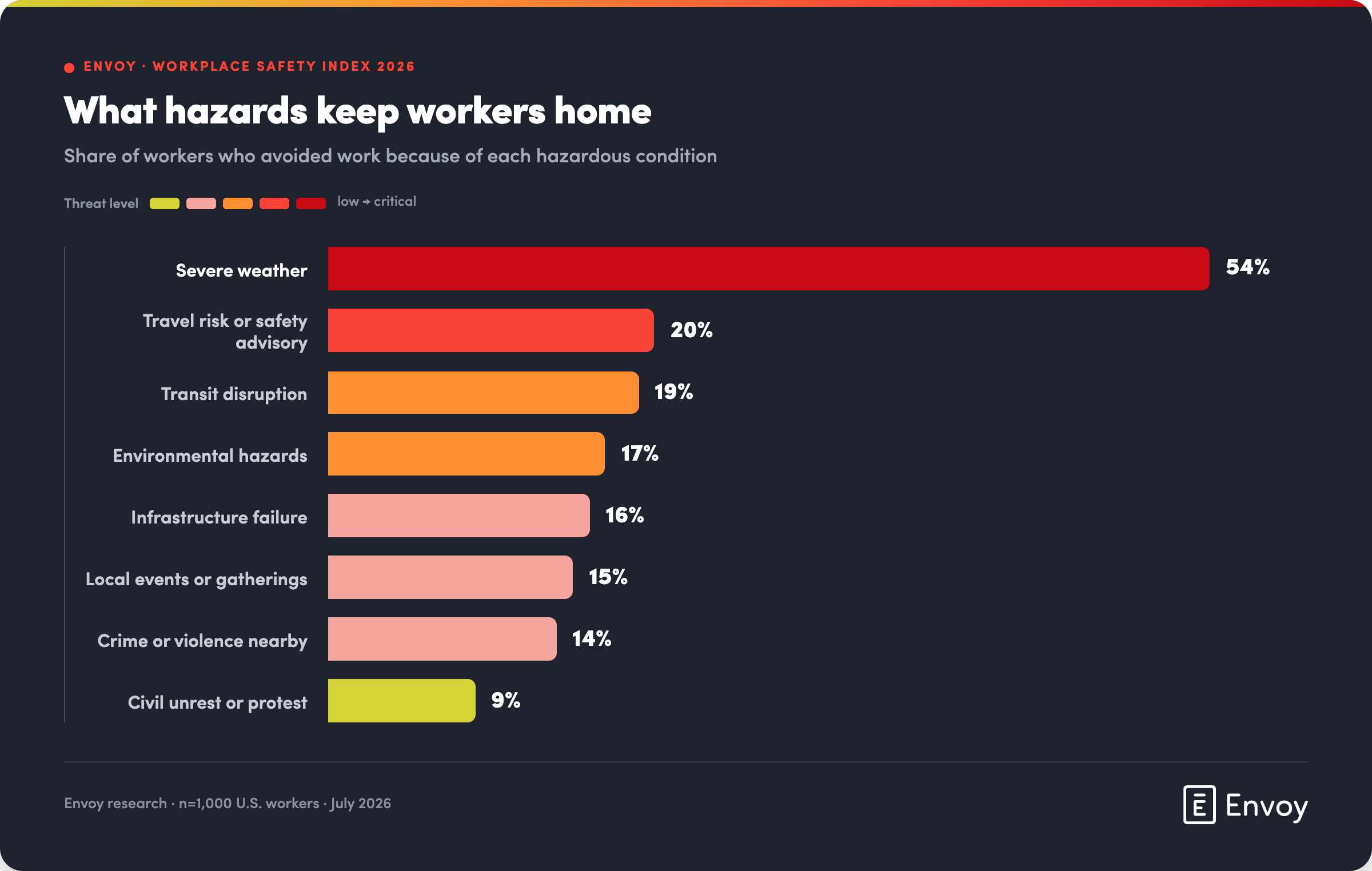
- Severe weather — 54%
- Travel risk or safety advisory — 20%
- Transit or transportation disruption — 19%
- Environmental hazards — 17%
- Infrastructure failure — 16%
- Local events or public gatherings — 15%
- Crime or violence near workplace — 14%
- Civil unrest or protest activity — 9%
Severe weather dominates—54% have stayed home because of blizzards, heavy rain, extreme heat or cold. But the broader list tells a more nuanced story: workers are responding to a range of threats, from the meteorological to the criminal to the infrastructural.
What's particularly notable is the 14% who have avoided work specifically due to crime or violence near their workplace. That's 1 in 7 workers making a safety decision based on localized security concerns. For many organizations, that signal goes unheard.
The generational divide
The research reveals a striking generational pattern. Gen Z is significantly more likely to avoid work and report feeling unsafe:
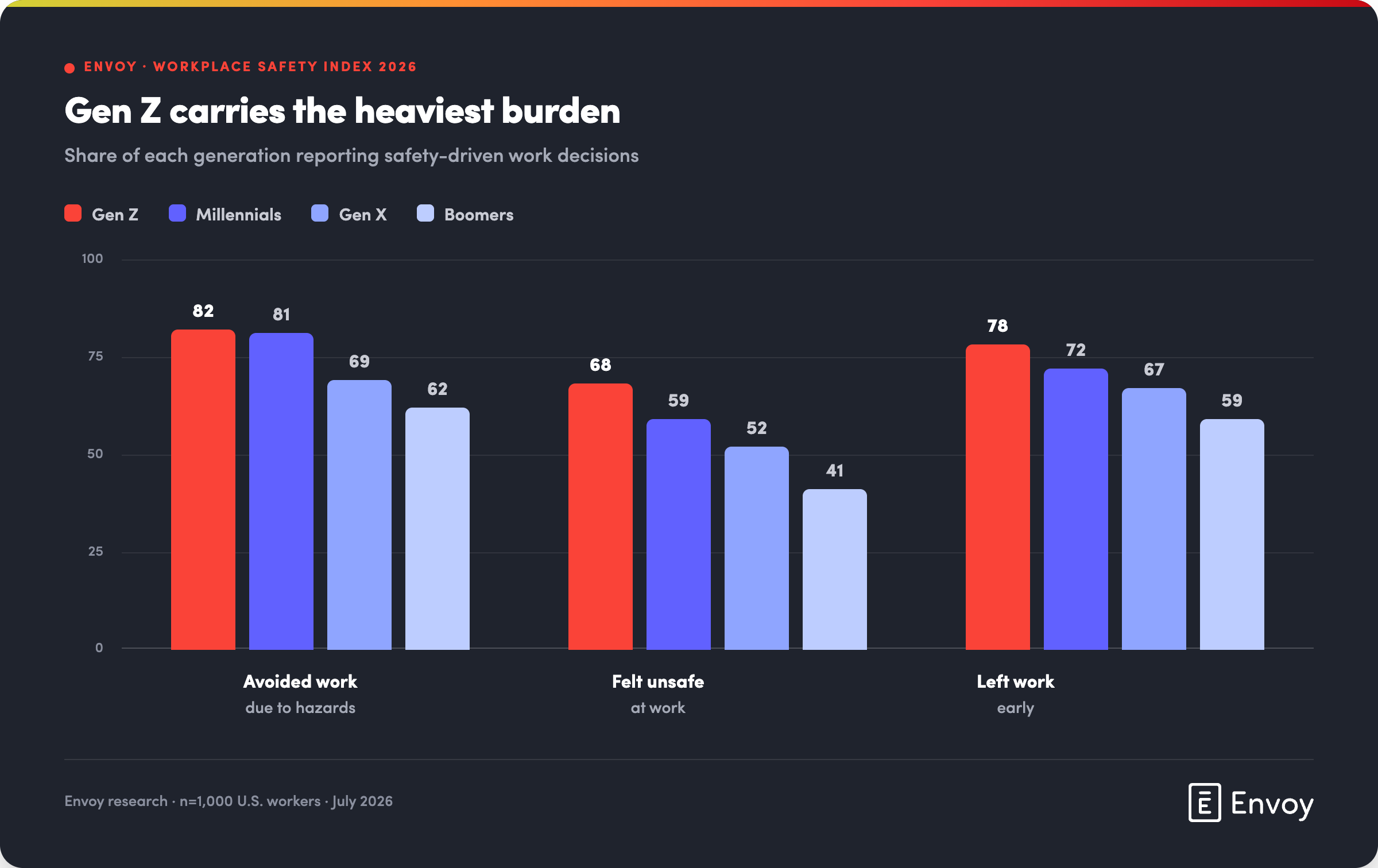
- 82% of Gen Z have avoided work due to hazardous conditions, compared to 81% of Millennials, 69% of Gen X, and 62% of Baby Boomers.
- 68% of Gen Z have felt unsafe at work, compared to 59% of Millennials, 52% of Gen X, and 41% of Boomers.
- 78% of Gen Z have left work early for any reason, compared to 72% of Millennials, 67% of Gen X, and 59% of Boomers.
Whether this reflects genuine differences in risk exposure or differences in risk tolerance (or reporting), the trend is clear: younger workers are making more safety decisions, more often.
The communication gap: what workers need vs. what they get
Here's where the research becomes urgent. When a disruptive event occurs, workers learn about it through five main channels:
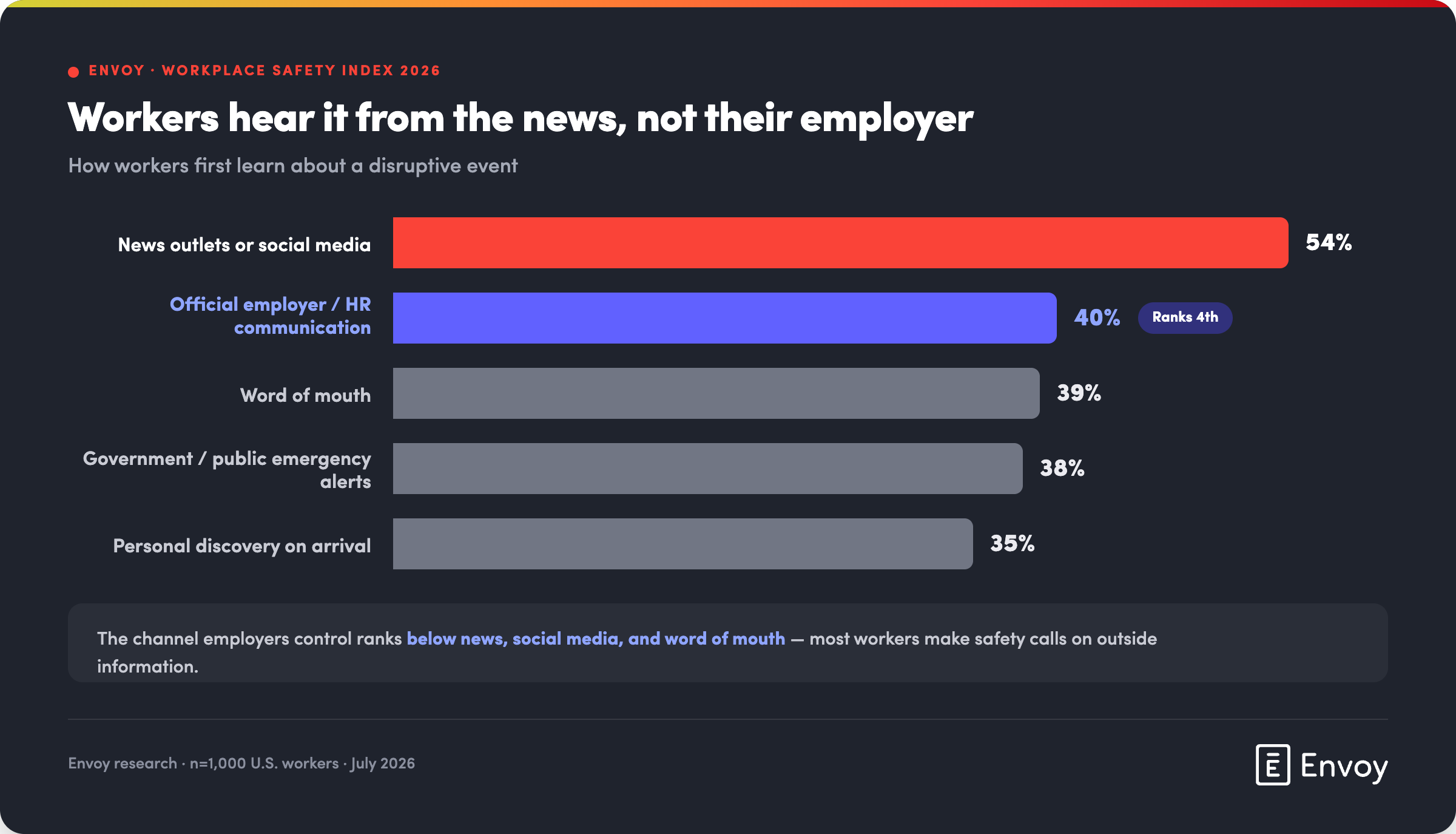
- 54% hear about it through news outlets or social media
- 40% learn from official employer/HR communication
- 39% find out through word of mouth
- 38% receive government or public emergency alerts
- 35% discover it on their own—by stepping outside into the weather or seeing something as they approach the office
But 20% only figure it out after they've already arrived at work.
This is a critical insight: the majority of workers are relying on external sources—news, social media, conversations—to make decisions about whether it's safe to come in. Their employer's official communication ranks fourth, behind news feeds and word-of-mouth.
The problem intensifies for workers who have experienced crime or violence near their workplace. They're nearly 3x as likely to figure out disruptions on their own (34%) rather than hear from official channels (12%) compared to other workers. In other words, the people with the highest risk profile are the least likely to receive timely, authoritative information from their employer.
What do workers actually want?
When asked what they wish their employer did differently to keep them safe during severe weather, local disruptions, or security incidents, 79% of workers provided a substantive response. That's 790 respondents out of 1,000—a significant share who took the time to articulate their safety concerns. Their answers reveal a clear pattern: workers want what most organizations aren't delivering.
The top priorities cluster around four core needs:
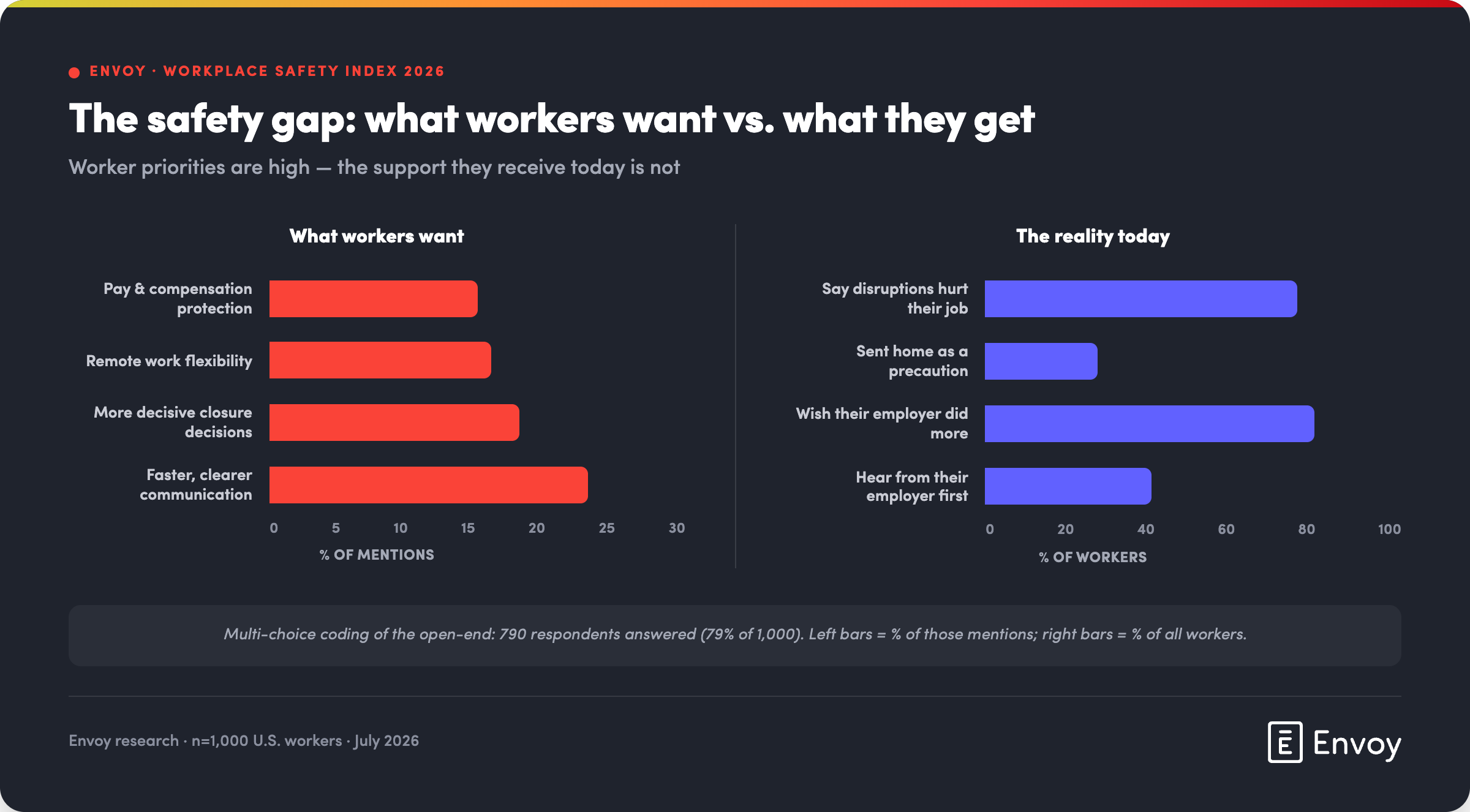
Faster, clearer communication and advance warning (23% of mentions)
Among those who answered the open-end question, nearly a quarter (23% of mentions) emphasized the need for faster, clearer communication—not after a crisis has begun, but before.
"I wish my employer would provide faster emergency alerts and clearer communication during severe weather or security incidents."
"Alert us about changes to the office schedule in advance, ideally 24 hours, so we can make arrangements if needed."
More decisive shutdown and closure decisions (18% of mentions)
Another 18% called for more decisive closure decisions; workers are exhausted by last-minute announcements that leave them scrambling to arrange childcare or adjust commutes.
"I wish employer can make decision a little earlier for shut down or opening. My employer always makes last minute decision."
"Making the decision to close sooner. When bad weather is expected."
Remote work flexibility during disruptions (16% of mentions)
More than one in six respondents stressed the need for remote work flexibility when conditions make commuting unsafe or impossible, a solution that's become normalized in many organizations yet remains unavailable when workers need it most.
"I wish they would let us work remotely in cases of severe weather to where we can't make it into the physical store."
"If there is a weather warning of any kind, let employees work from home especially now that it is so normal and easy."
Pay and compensation protection (15% of mentions)
Finally, 15% emphasized that financial responsibility must accompany safety decisions. When employers send workers home or force closures, workers expect compensation to follow, not as a favor, but as an acknowledgment that the organization bears responsibility for the disruption.
"Still compensate employees for wages lost due to unforeseen events or natural disasters."
"I wish they would have set up protocols and paid time off when outside circumstances impede our ability to attend work like weather or civil disruptions."
The takeaway here is that 3 out of 4 workers wish their employer did something different. When their safety is at stake, workers want greater visibility, decisiveness, and accountability from their organization.
The compliance imperative
This data has real legal and regulatory weight. 76% of employees say it's now on the company to monitor threats to executive safety. But here's the critical expansion: 81% say companies have an equal responsibility to general employees.
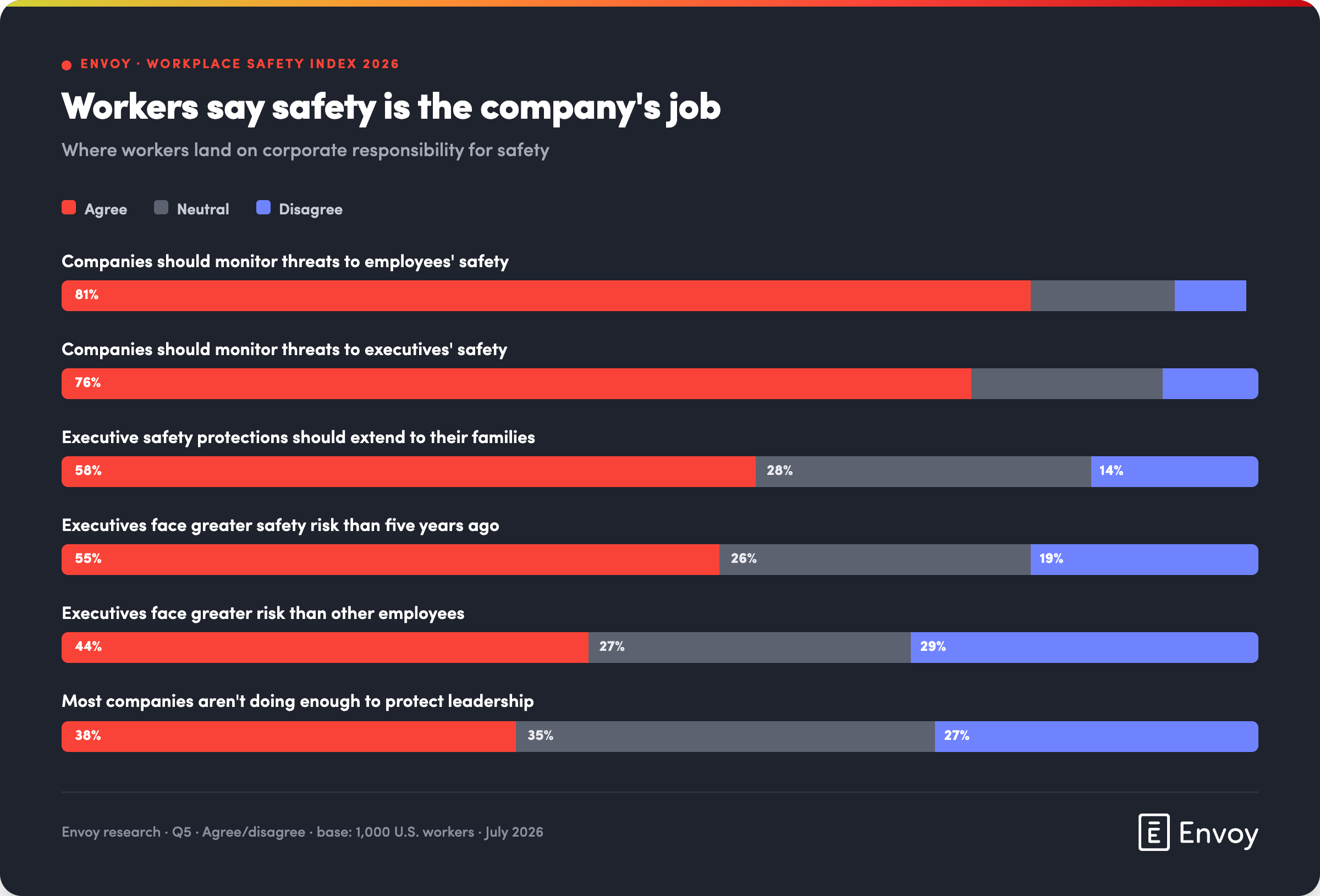
That's a clear signal that the duty of care expectation has shifted. It's no longer just about protecting the C-suite. Shareholders, regulators, and workers themselves increasingly expect organizations to have systems in place that monitor and respond to threats affecting their entire workforce.
Consider the liability landscape:
- OSHA 29 CFR 1910.38 requires employers to have emergency action plans.
- ISO 45001 places responsibility on organizations to identify hazards and assess risks.
- SEC operational risk disclosures now scrutinize how companies manage security and safety.
When something happens—a security incident, a weather event, a public disturbance—the first question from regulators, lawyers, and insurance carriers is: Did you know? Did you communicate? Can you prove it?
Most organizations answer "partially" to the first two, and "no" to the third. The occupancy data, notification records, and response timeline that would answer that question authoritatively typically live in separate systems, if they exist at all.
The true cost of disruptive events on today's workforce
The research hints at this problem without naming it directly. When asked how disruptive events have affected their ability to do their job, workers reported:
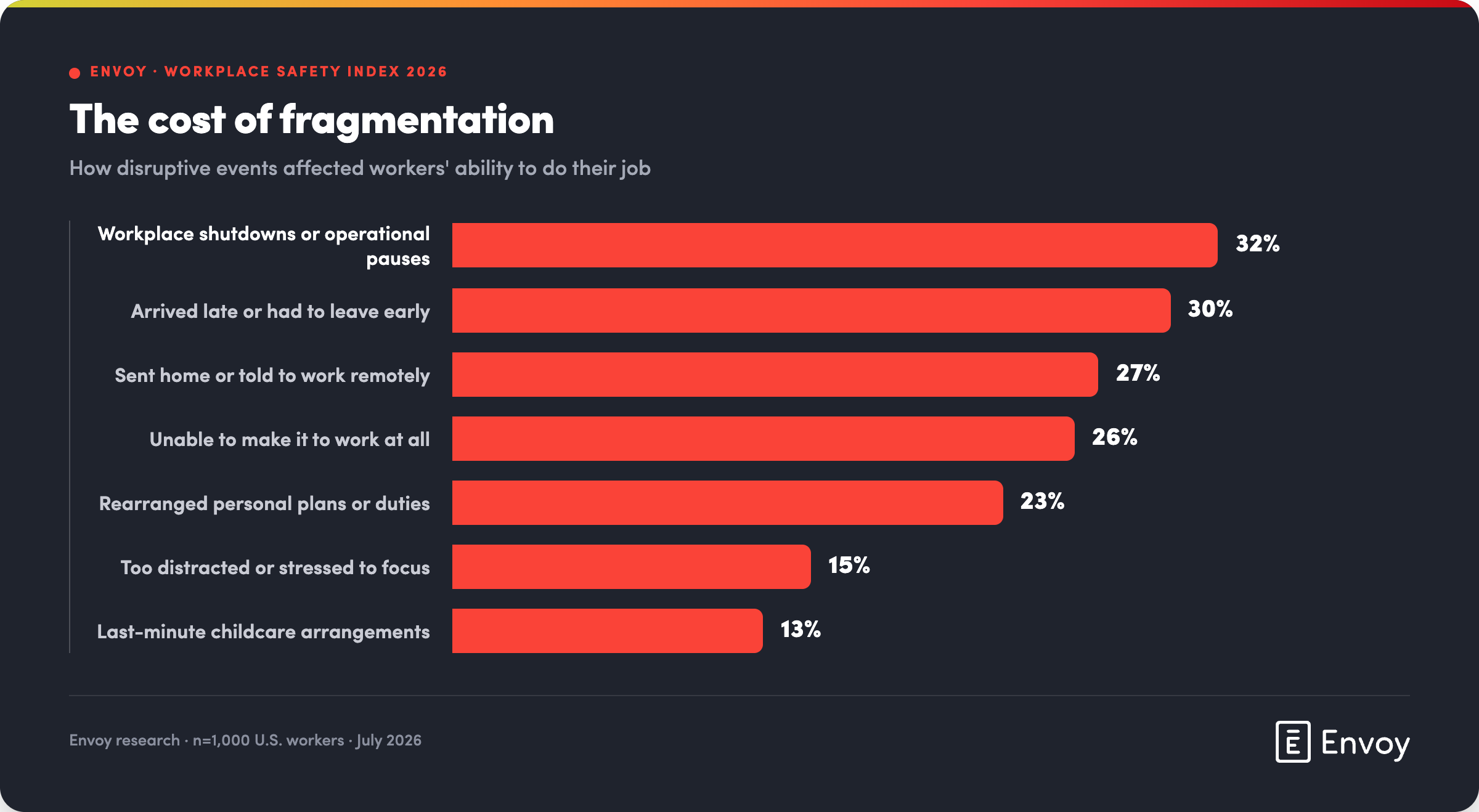
- 32% experienced workplace shutdowns or operational pauses
- 30% arrived late or had to leave early
- 27% were sent home or told to work remotely as a precaution
- 26% were unable to make it to work entirely
- 23% had to rearrange personal plans or responsibilities
- 15% were too distracted or stressed to focus effectively
- 13% had to make last-minute childcare arrangements
What these numbers represent, in aggregate, is lost productivity, disrupted operations, and organizational chaos. But on a case-by-case basis, they represent individual decisions made without complete information.
The root cause: Detection, notification, and accountability are fragmented across separate tools.
A security team spots a threat in one tool. They notify employees through a separate system. Occupancy data—who's actually in the building, where they are, whether they received the message—lives nowhere, or in a third system disconnected from both. When the incident is over, piecing together what happened requires manual work across multiple platforms.
That fragmentation has a cost in every currency that matters: time, risk, compliance, employee trust.
What organizations should do now
The research points toward four actionable imperatives:
1. Centralize threat visibility
Organizations should have a single, authoritative view of threats that affect their people and places. This should include external signals (weather, civil unrest, crime, infrastructure, travel advisories) and internal signals (access control events, occupancy data, employee reports).
2. Make communication proactive, not reactive
The fact that 40% of workers hear from their employer directly—and that rank fourth behind news and word-of-mouth—suggests organizations aren't communicating with sufficient speed or authority. Waiting for employees to bring concerns to you is too late.
3. Connect presence data to incident response
Employees in a directory and visitors who checked in are different groups. A notification sent to 500 people on an org chart might reach 200 who are actually in the building. Adding another 40 visitors who checked in today changes the accountability picture entirely.
4. Build an audit trail from first alert to full accountability
When regulators ask "what did you do and when did you do it?", organizations need a timestamped record that answers: Did you detect it? When? Did you communicate to people at risk? Which people? Did they acknowledge? Which didn't? What was your response?
That audit trail should be automatic, not archaeological.
The path forward
The workplace safety landscape has shifted. It's no longer acceptable to have fragmented tools, slow communication, or incomplete occupancy data when decisions that affect people's safety are on the line.
Workers are telling organizations what they need: visibility, decisiveness, and proof that their safety matters—not just for executives, but for everyone.
Ready to take the next step in strengthening your emergency preparedness? See Envoy Response in action with live product tour. Book your demo today.
Read more

In this guide, we’ll break down how cloud digital signage works, how it compares with on-premise signage, cost factors, and what to look for in a solution.

Learn how to support ITAR compliance with visitor screening, access approvals, onsite controls, and records that document each visit.
Compare leading mass notification vendors, their best-fit use cases, and key tradeoffs. Learn what to evaluate before choosing a system.
New Envoy research reveals where physical security gaps emerge and whether organizations can prove their controls are working.
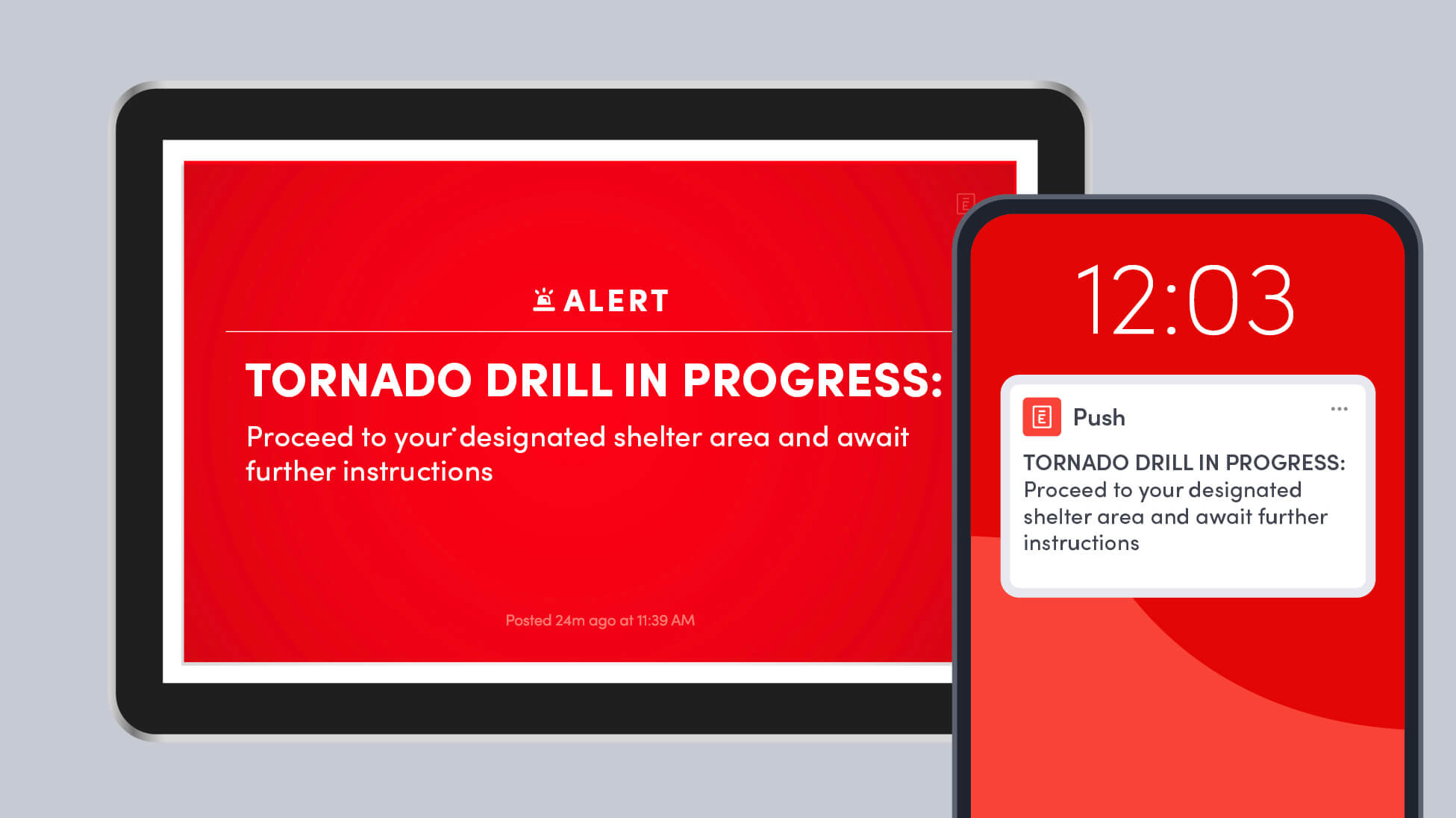
Learn how to run a workplace tornado drill, choose safer shelter areas, account for everyone onsite, and improve your emergency response plan.
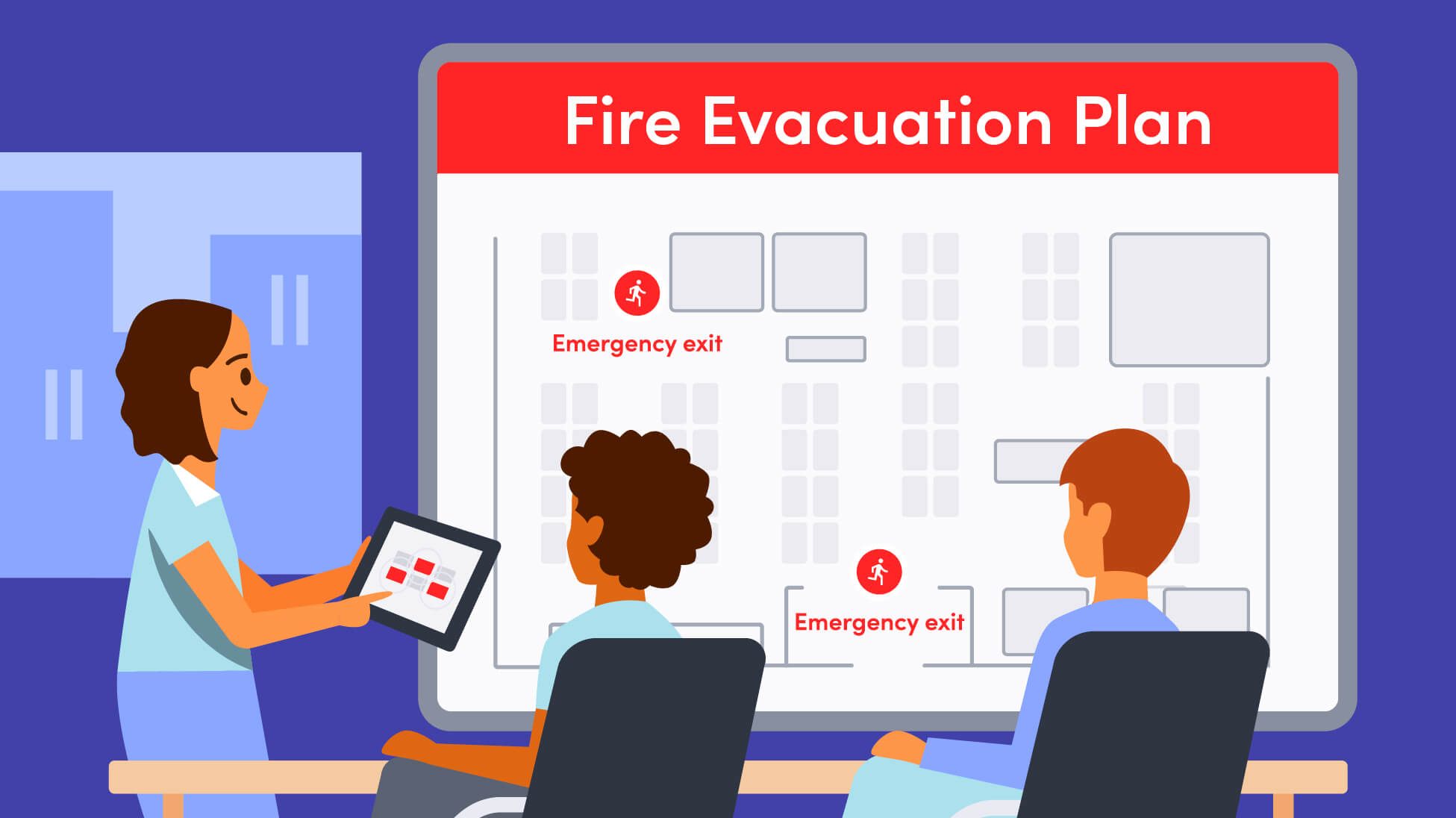
A strong fire evacuation plan goes beyond exit routes. Here’s how to plan for alerts, muster points, accountability, response roles, accessibility, and everyone who may be onsite.