

Active shooter drills at work: How to plan them responsibly

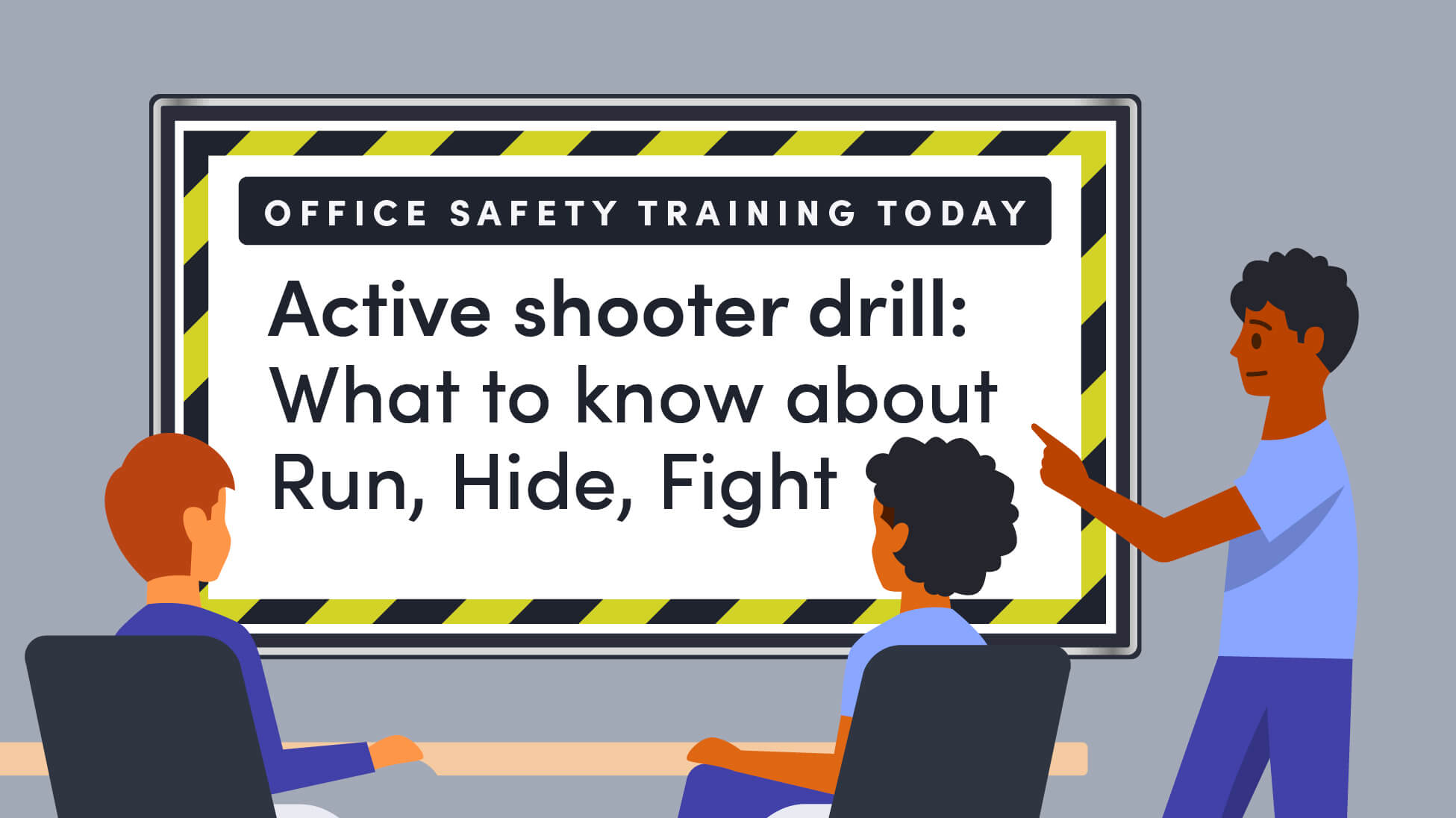
Active shooter drills require a careful balance: people need enough practice to know what to do, but the exercise should never depend on fear or surprise to feel effective. The strongest drills focus on clear decisions, communication, and accountability, then build from there.
Let’s dive into how to run the exercise effectively and responsibly.
What an active shooter drill should accomplish
An active shooter drill is a planned exercise that gives employees a chance to practice the procedures in your emergency action plan. It can test how you send alerts, how people make decisions based on where they are, and how your response team accounts for everyone.
Important: Active shooter drills at work should never attempt to convince employees that a real attack is underway.
CISA recommends building preparedness progressively through training and exercises, while the FBI’s current Active Shooter Attack Prevention and Preparedness course uses controlled scenarios designed to teach without causing fear or apprehension.
Active shooter preparedness is only one part of a broader workplace safety strategy. Teams should understand the different types of workplace violence and have a clear workplace violence prevention plan for recognizing, reporting, and responding to concerns before they escalate.
Choose the right type of exercise
You don’t have to start with a building-wide simulation. CISA recommends starting with simpler, discussion-based exercises before moving into more involved drills.
For most workplaces, a tabletop exercise, walkthrough, or controlled announced drill can test the parts of the plan employees actually need to understand without adding unnecessary realism.
Avoid surprise and unnecessary distress
Surprise is not the goal of an active shooter drill.
CISA’s Interagency Security Committee guidance for federal facilities recommends announcing drills and exercises before they take place. In workplace settings, employees should know an exercise is occurring and have the option to not participate.
This matters because people come to work with experiences you may know nothing about. A 2025 peer-reviewed study of healthcare workers found that a poorly coordinated, unannounced active shooter drill had lasting emotional and professional effects on some workers.
A trauma-informed plan should:
- Give advance notice. Tell employees that a drill is happening and explain what it will involve.
- Make every drill message unmistakable. Clearly state that there is no active threat. For example, display a visible “DRILL IN PROGRESS” across workplace screens alongside shelter or response instructions so people nearby know the exercise is simulated.
- Avoid theatrical violence. Don’t use surprise actors, simulated gunfire, fake weapons, graphic injuries, or other tactics designed to convince people the event is real.
- Offer a way to opt out. Give employees a clear alternative if participating could be distressing.
- Plan support. Let employees know where they can turn if the exercise brings up a difficult reaction.
- Consider timing. Avoid scheduling the drill immediately after a widely publicized act of violence or another event that could heighten distress.
- Be a cross-team effort. Legal, HR, and Comms teams should review the exercise and participant communications before it goes out.
Train your teams on the “Run, Hide, Fight” framework
Federal guidance uses Run, Hide, Fight to help people think through their options during an active shooter situation. It’s not a step-by-step sequence. The right response depends on what’s happening and where you are.
During the drill, focus on helping people understand which option makes sense based on where they are and what’s happening. Someone near an exit may respond differently than someone several floors away, and there’s no need to physically simulate a confrontation.
Plan the exercise before you run it
Once you know what you want to test, bring in the right teams, such as Security, Facilities, HR, Legal, Comms, and building management. You may also want to coordinate with local law enforcement or first responders so everyone understands the plan and their role.
Before the drill:
- Define the objective. Decide whether you’re testing communication, employee decision-making, accountability, response roles, or a specific part of the plan.
- Assign clear roles. Identify who’ll start and stop the exercise, send communications, observe what happens, handle employee questions, and issue the all-clear.
- Coordinate externally. Notify building security, alarm monitoring services, law enforcement, or other parties that could mistake drill activity for a real emergency.
- Plan for accessibility. Include people with disabilities and other access or functional needs when developing the exercise. CISA specifically recommends involving them in exercise planning rather than making assumptions about what assistance they need.
- Account for visitors and contractors. Make sure the plan also covers folks who aren’t employees, including how they’ll receive drill instructions and how your team will account for them if they’re onsite.
- Prepare employee support. Share the drill scope, opt-out process, and available support resources before it begins.
How to run an active shooter drill at work
Keep the exercise tied to the objectives you chose. You don’t need to recreate every aspect of an attack to learn whether your plan works.
- Brief participants. Remind everyone that an exercise is taking place, what will and won’t happen, and how they can stop participating if they need to.
- Send the drill notification. Start with the communication process you’re testing. Clearly label every alert as a drill and provide enough information for employees to decide what their plan calls for.
- Practice the response. Employees can identify or move through the appropriate Run, Hide, Fight response for their location. Observers should watch for unclear instructions, access issues, communication gaps, and parts of the plan that don’t work as expected.
- Account for people. Use check-ins or a digital roll call to determine who has responded and who’s still unaccounted for during the drill. Unlike a workplace fire drill, an active shooter exercise shouldn’t automatically funnel everyone to one outdoor muster point; the appropriate safe location may vary based on the scenario.
- Send the all-clear. Only the person or team designated in your plan should end the exercise. Participants should know which source they can trust for the official all-clear.
- Debrief while it’s fresh. Ask participants and observers what worked, what was confusing, and what they would change. Give employees another reminder of available support resources before returning to normal operations.
After the drill: Document what you learned
The drill isn’t finished when the all-clear goes out. Capture enough information to improve the next version of your plan.
Document:
- Which parts of the plan you tested
- Who participated
- Whether alerts reached the intended audience
- Gaps in accessibility or communication
- People who were difficult to account for
- Feedback from employees and observers
- Changes you plan to make
- Who owns each follow-up action
CISA exercise resources include after-action reporting and improvement planning as part of the exercise process. The goal is to turn observations into specific changes—not just to record that a drill took place.
Collect employee feedback about the experience itself, too. If an exercise caused unexpected distress, that’s relevant information for how you design the next one.
How Envoy can support active shooter preparedness
Technology doesn’t determine how people should respond to an active shooter incident. Your emergency plan, training, and guidance from public safety authorities should do that.
Where technology can help is communication and accountability. Envoy Response gives teams tools to reach the right people, track their status, and maintain a clear incident record.
- Reach the right people based on real-time presence. Envoy matches threats with up-to-date location and presence data, helping teams identify which employees, visitors, and contractors may be affected and target alerts accordingly.
- Use multiple communication channels. Reach people through SMS, email, push, Slack, Teams, and across workplace screens—whether by mass notifications or targeted alerts. Depending on your emergency plan, text-based channels can also provide a more discreet way to share instructions when an audible announcement isn’t appropriate.
- Manage the incident end to end. Employees and visitors can mark themselves safe, while response teams use digital roll call and two-way chat to identify people who haven’t responded or may need assistance.
- Keep a defensible record. Notifications, responses, status updates, and other incident activity are automatically captured in a timestamped, exportable record for after-action review and reporting.
Ready to learn more about Envoy Response? Schedule a demo today.
Workplace active shooter drill FAQs
What is an active shooter drill at work?
An active shooter drill is a planned exercise that helps employees practice parts of their workplace’s response plan, such as communication, Run, Hide, Fight decision-making, accountability, and the all-clear.
Should active shooter drills be announced?
Yes. Employees should know that an exercise is taking place and what it will involve. CISA guidance also recommends announcing drills rather than trying to convince participants that an attack is real.
What does Run, Hide, Fight mean?
Run, Hide, Fight is a response framework for active shooter situations. Run means moving away from the threat when there’s a safe way to do so. Hide means securing yourself when evacuation isn’t safe. Fight is a last resort when someone’s life is in imminent danger.
Should active shooter drills use fake gunfire or weapons?
Generally, no. Drills can test communication, decision-making, and accountability without fake weapons, gunfire, injuries, or other tactics designed to make the exercise feel real. The FBI’s ASAPP training also avoids real and fake firearms.
Are active shooter drills required at work?
There’s no federal OSHA standard requiring private employers to conduct active shooter drills, but state and industry rules may apply. For example, California’s SB 553 requires most covered employers to maintain a workplace violence prevention plan and provide training, while New York’s Retail Worker Safety Act requires covered retailers to include active shooter events in workplace violence prevention training.
Always check the rules that apply to your workplace and have your Legal team review your drill program before implementation.
Read more

In this guide, we’ll break down how cloud digital signage works, how it compares with on-premise signage, cost factors, and what to look for in a solution.

Learn how to support ITAR compliance with visitor screening, access approvals, onsite controls, and records that document each visit.
Compare leading mass notification vendors, their best-fit use cases, and key tradeoffs. Learn what to evaluate before choosing a system.
New Envoy research reveals where physical security gaps emerge and whether organizations can prove their controls are working.
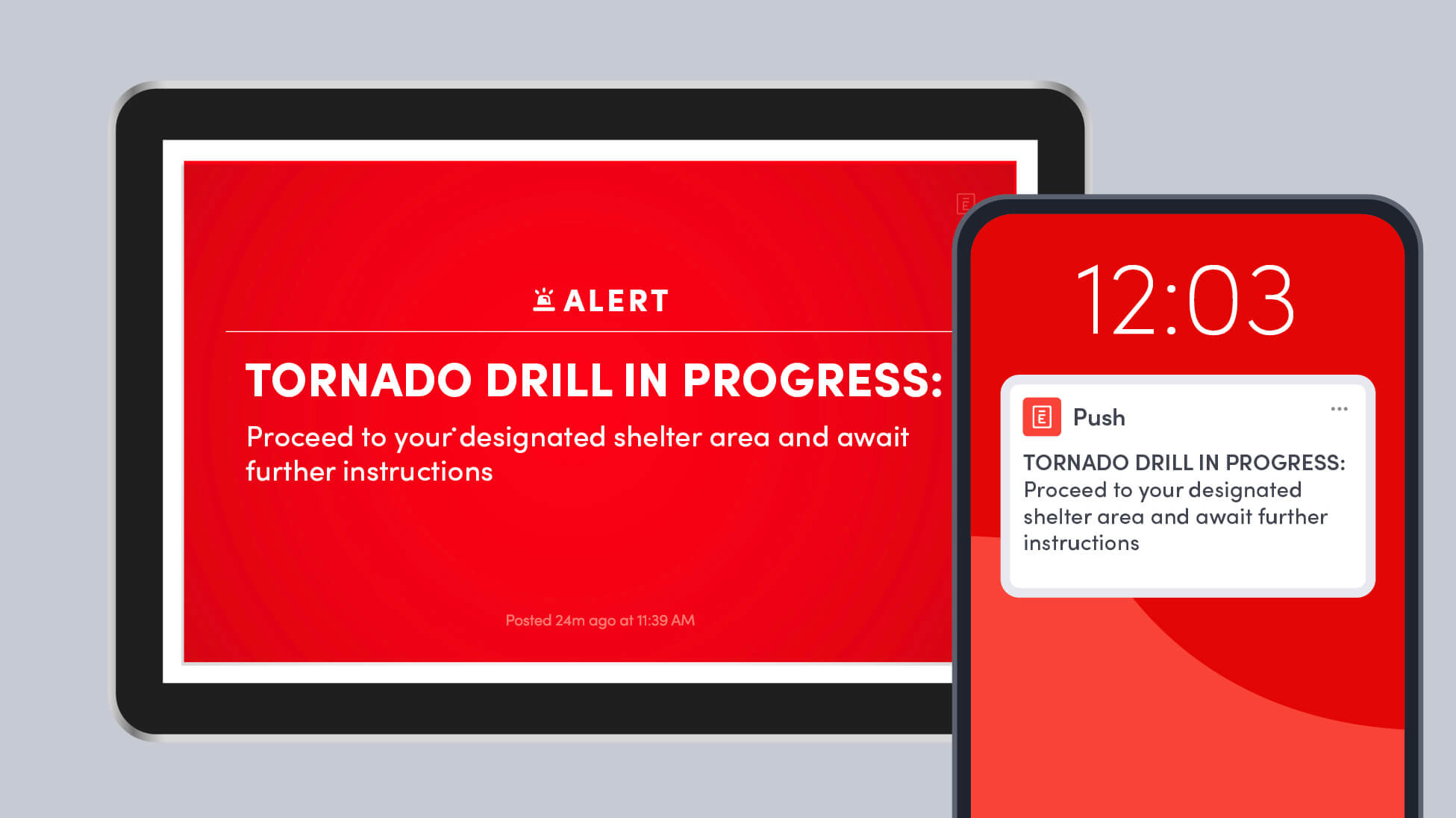
Learn how to run a workplace tornado drill, choose safer shelter areas, account for everyone onsite, and improve your emergency response plan.
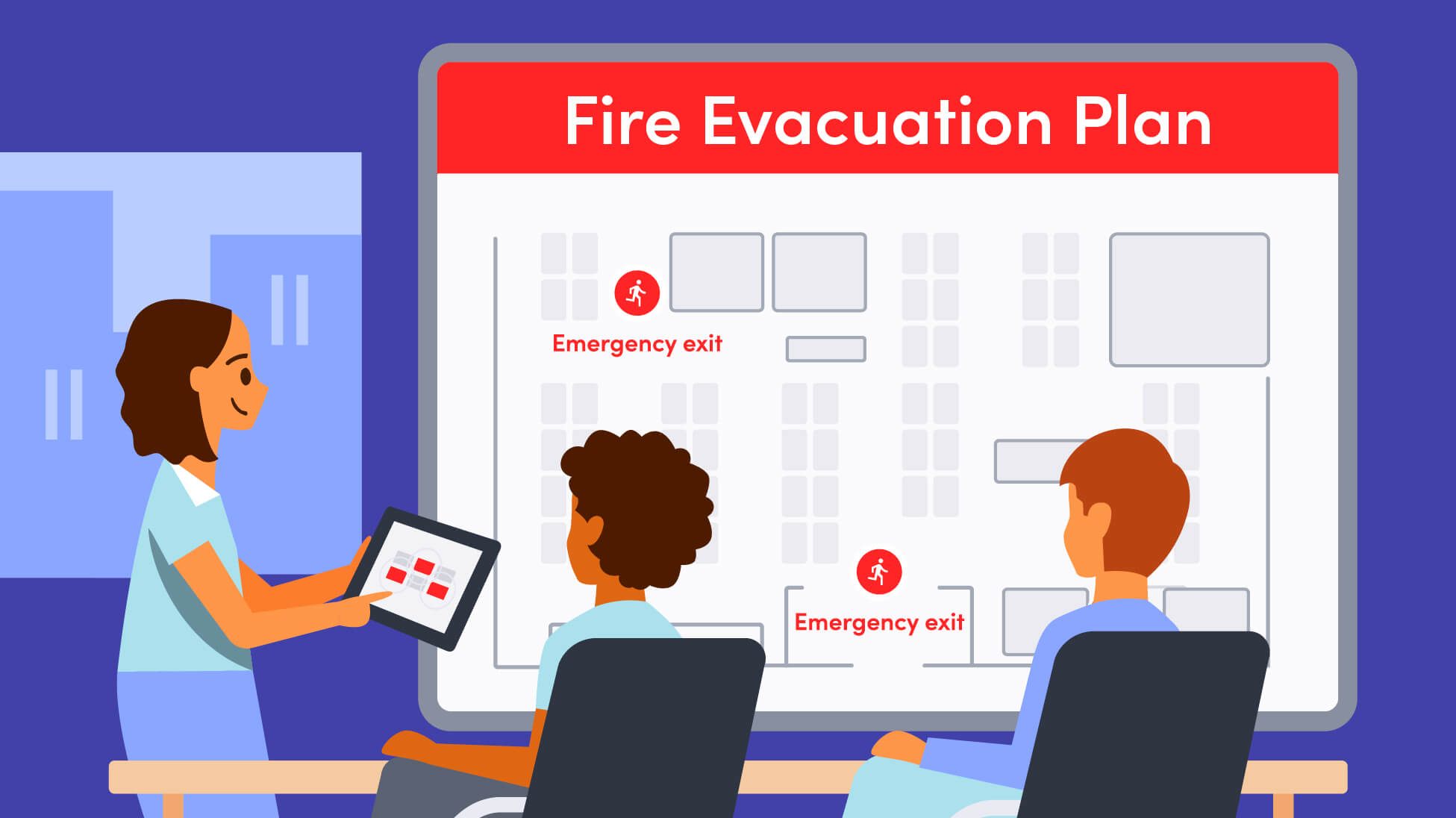
A strong fire evacuation plan goes beyond exit routes. Here’s how to plan for alerts, muster points, accountability, response roles, accessibility, and everyone who may be onsite.