

How to create a business continuity plan: Key steps for operational resilience


The organizations that recover fastest from disruptions usually don’t improvise. They’ve mapped critical functions, assigned ownership, and built systems that hold up under pressure. This is called a business continuity plan.
Below, we’ll break down the definition, cover business continuity plan best practices, and explain how to build a plan that helps your organization stay operational during disruptions.
What is a business continuity plan?
A business continuity plan (BCP) is a documented strategy for maintaining critical operations during and after a disruption. It outlines how an organization will respond when people, systems, facilities, or core business processes are affected.
A strong BCP helps organizations:
- Reduce downtime and recovery time
- Limit operational, financial, and reputational impact
- Keep critical people, systems, and business functions running during disruptions
How is a business continuity plan different from a disaster recovery plan?
A business continuity plan covers the full organization, including people, operations, facilities, communications, and technology. The primary goal? Keeping the business running while recovery is in progress.
A disaster recovery plan is one component of business continuity. It focuses on restoring specific systems and data after a failure, and typically focuses on IT infrastructure. The aim of a disaster recovery plan is to get systems back online as soon as possible.
Why does business continuity planning matter?
Business disruptions no longer stay confined to a single system or location. Cyber incidents affect physical operations (and vice versa), infrastructure failures disrupt access control and communications, and vendor outages create downstream operational gaps across multiple sites simultaneously.
The financial impact of a disruption adds up quickly. Recent research found that unplanned downtime now costs Global 2000 companies an estimated $600 billion each year—a 50% increase over the past two years.
Organizations that recover well have already identified critical functions, mapped dependencies, assigned ownership, and built continuity processes that hold up under pressure. They don’t improvise in the moment.
For organizations operating across multiple sites, disruptions rarely stay contained to one location. A continuity plan helps teams coordinate response across offices, maintain visibility into what’s affected, and keep critical operations moving even as conditions change in real time.
Key components of a business continuity plan
Wondering what should be included in a business continuity plan? At a high level, most plans focus on the following:
We’ll break down each of these components in more detail below.
How to prepare a business continuity plan
Step 1: Assign ownership and build your team
A business continuity plan without clear ownership doesn't get maintained, tested, or executed under pressure.
Start by identifying who is responsible for leading the BCP. This person won’t just own the document, but drive the process, coordinating across departments, and making decisions when the plan needs to be activated.
From there, build a cross-functional team that covers the domains a disruption will actually touch in your organization. Consider including:
- Operations to address how critical business functions continue
- IT and security to cover systems, data, and physical access
- HR to manage employee communications and safety
- Legal and compliance to flag regulatory obligations across jurisdictions
- Communications to handle internal and external messaging
- Facilities to address physical sites, utilities, and access
Each member should own a specific domain and have a designated backup who understands their role and how to execute it if the main contact can’t. For multi-site organizations, each location should also have a local contact who can execute the plan on the ground.
Step 2: Conduct a business impact analysis
Before you can build a continuity plan, you need to understand what you're protecting and what happens if it fails.
A business impact analysis (BIA) identifies your critical functions and quantifies the consequences of losing them. It answers two fundamental questions: what would stop working, and how quickly does that become a serious problem?
For each critical function, the team should assess:
- Recovery time objective (RTO). How long can this function be unavailable before it causes significant harm? An hour? A day? A week?
- Recovery point objective (RPO). How much data or work output can you afford to lose? If your order management system goes down, can you reconstruct the last four hours of transactions, or does every minute of lost data matter?
- Downstream dependencies. What other functions, systems, or teams rely on this one? A failure in one area often cascades into several others. Mapping those dependencies in advance is what prevents surprises during an actual disruption.
The end result should be a prioritized list of business functions based on what matters most and how quickly each one needs to recover.
Step 3: Identify and assess your risks
Once you know what you're protecting, you need to understand what threatens it.
For each identified risk, your team should assess both likelihood and impact. Focus first on the disruptions most likely to create serious operational problems across your people, systems, or facilities.
Risk assessments also shouldn’t be treated as a once-a-year exercise. Threats change constantly, and continuity plans work best when teams regularly revisit assumptions and update plans as operations evolve.
{{protip-1}}
Step 4: Develop your recovery strategies
Now that you’ve identified your critical functions and assessed risks, the next step is defining how you'll maintain or restore each function under different disruption scenarios.
Recovery strategies should be practical and specific, not aspirational. For each critical function, answer: what exactly will we do if this is disrupted, and what do we need in place for that to work?
- Alternate work arrangements. If a primary workplace becomes inaccessible, where do people work? Remote work infrastructure, backup facilities, and coworking arrangements for critical operations teams should all be documented in advance.
- System and data redundancy. For IT-dependent functions, redundancy is non-negotiable. Offsite backups, failover systems, and cloud-based infrastructure that can be accessed from any location all lessen recovery time when primary systems fail.
- Vendor and supply chain alternatives. For every critical vendor or supplier, identify at least one alternative. Know your contractual notification and recovery obligations on both sides. If a primary vendor goes down, you shouldn't be searching for alternatives while the disruption is already taking place.
- Communication protocols. Define how you'll communicate internally with employees and externally with customers, partners, and regulators during a disruption. Pre-approved message templates, defined distribution lists, and a clear chain of communication ownership all reduce the chaos of real-time crisis communication.
For multi-site enterprises, recovery strategies need to account for every location, not just headquarters. A disruption affecting three sites simultaneously requires three sets of local response actions, coordinated through a central view that lets leadership see what's happening across all of them at once.
Step 5: Document the plan
Documentation is what makes continuity planning executable by anyone, under pressure, when the people who built the plan may not be available.
A complete BCP document should include:
Keep the plan accessible. A document that lives in a shared drive nobody can access during a network outage hasn't solved the problem it was meant to solve.
Step 6: Test the plan
Tabletop exercises
Bring your crisis team together around a realistic scenario and walk through the response step by step. Identify where people hesitate, where information is unavailable, and where the plan makes assumptions that don't hold up.
Functional drills
Test specific components of the plan in practice. Send a test notification through your actual emergency response system. Run an evacuation drill that reflects your current occupancy, including contractors and visitors. Verify that backup systems switch over properly when primary systems go down.
Full-scale simulations
Periodically, test the entire plan end to end. Activate the crisis team, execute response procedures, and run the communication protocols as if the disruption were real. This is the only way to find the gaps that tabletop exercises miss.
After-action reviews
Every test should end with a structured debrief. What worked? What didn't? What assumptions turned out to be wrong? Use the answers to update your plan.
Test the plan annually, at minimum, and more frequently when operations change significantly. This includes a new office opening, a major headcount shift, a new technology platform, or a meaningful change in your risk environment.
{{protip-2}}
Step 7: Maintain and update the plan
As headcounts shift, offices open and close, vendors change, and regulations evolve, be sure your plan keeps pace to avoid gaps that can turn into failure points.
Review and update your plan:
- After any real activation, to incorporate what you learned
- After any significant operational change
- After any test that surfaces gaps or outdated assumptions
- At least annually, regardless of whether anything has changed
Assign ownership over maintenance the same way you assign ownership over plan execution.
—
The organizations that recover fastest from disruptions do the planning work before anything goes wrong.
Ready to strengthen your business continuity strategy? Explore how Envoy helps organizations improve business continuity with better visibility, faster emergency coordination, and connected workplace systems.
If you’re building or refining your BCP, our Workplace emergency planning guide is a useful companion resource for thinking through operational risks, emergency response coordination, and multi-site preparedness.
See how security leaders are approaching integrated emergency response in our webinar: People, access, and emergencies.
Read more
Compare leading mass notification vendors, their best-fit use cases, and key tradeoffs. Learn what to evaluate before choosing a system.
New Envoy research reveals where physical security gaps emerge and whether organizations can prove their controls are working.
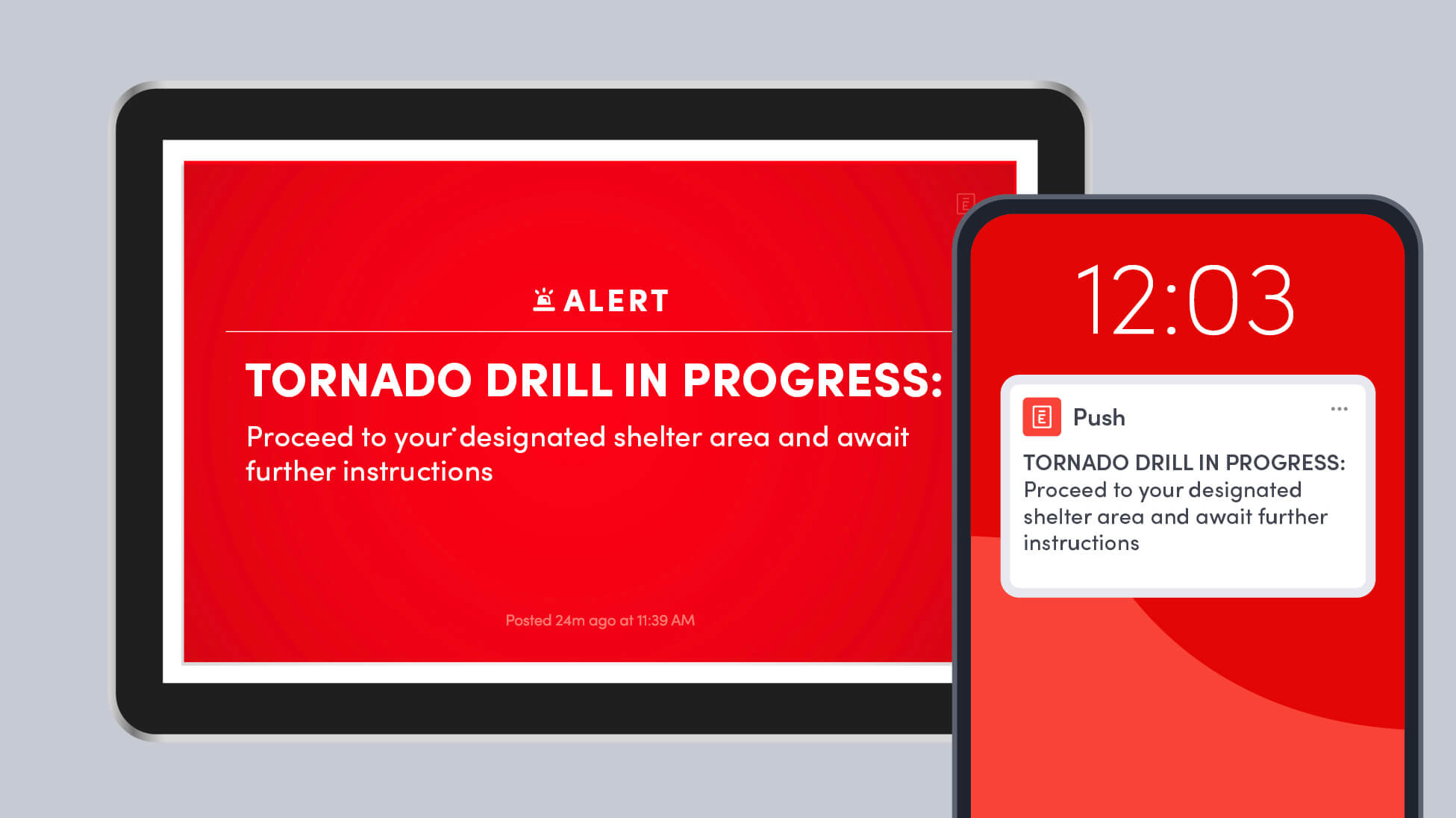
Learn how to run a workplace tornado drill, choose safer shelter areas, account for everyone onsite, and improve your emergency response plan.
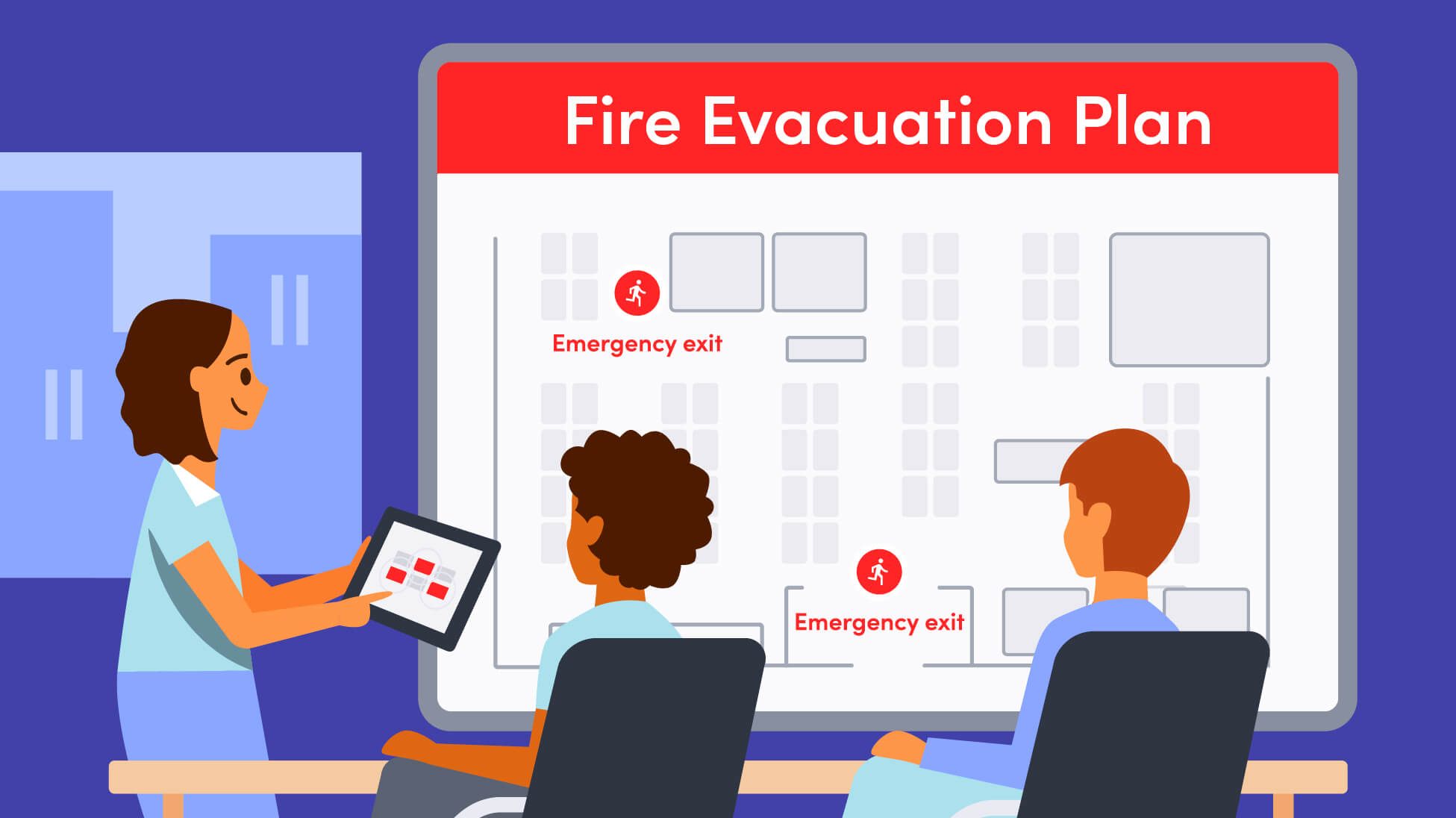
A strong fire evacuation plan goes beyond exit routes. Here’s how to plan for alerts, muster points, accountability, response roles, accessibility, and everyone who may be onsite.
This guide breaks down the key response roles every workplace should define, from incident leads and wardens to communications, accountability, and backup coverage.
Active shooter drills should build preparedness without creating unnecessary fear. Here’s how to test communication, decision-making, accountability, and response roles with a safer, more thoughtful exercise.