

Muster point meaning explained: what it is and how emergency mustering works

Muster point meaning explained: what it is and how emergency mustering works
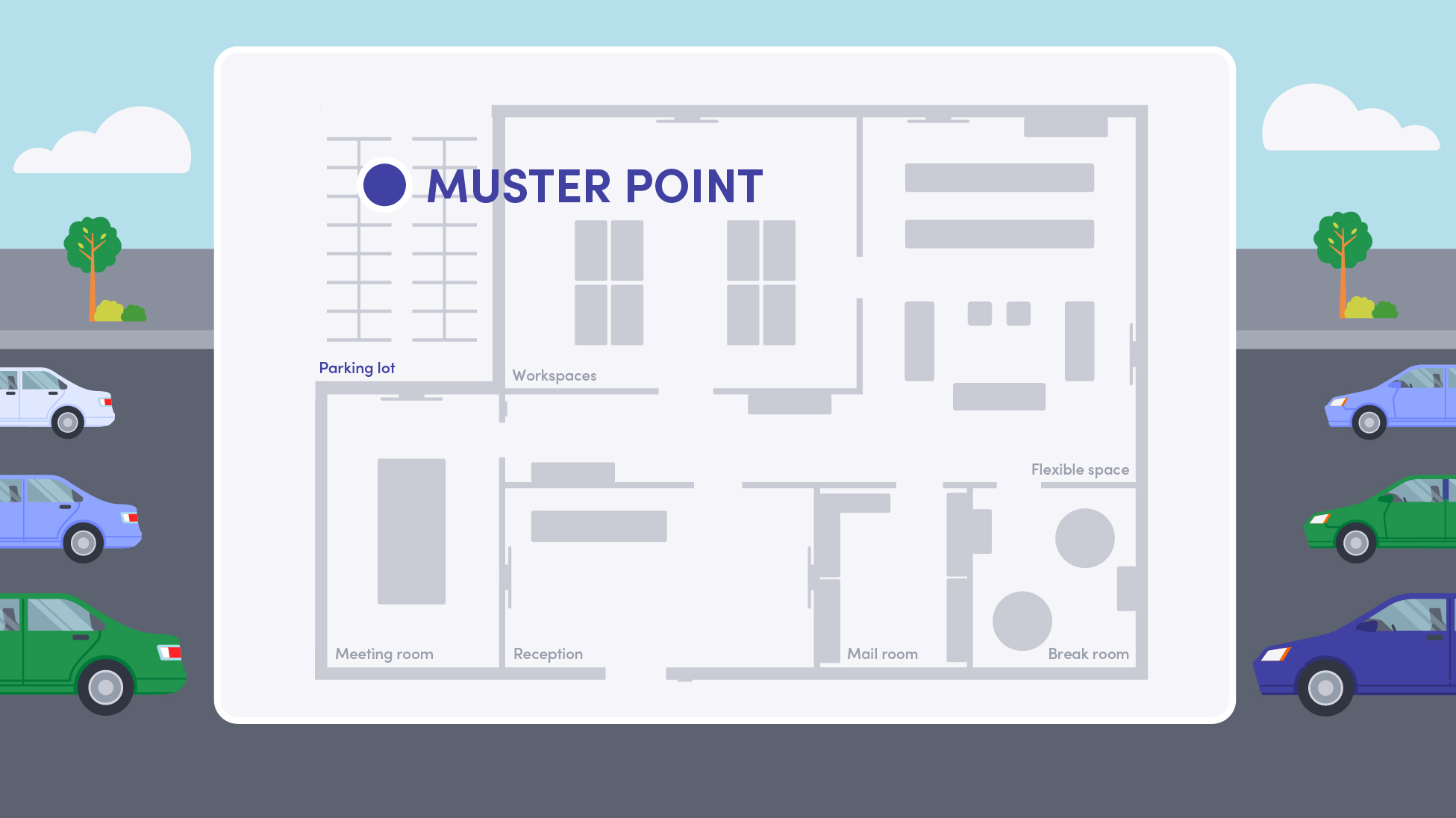
When an evacuation alarm goes off, most people know to leave the building. But where to go is often less clear. That’s exactly what a muster point is designed to solve. In this post, we’ll cover how a muster point works and what a well-run mustering process actually looks like.
What is a muster point?
A muster point (or muster area) is a designated safe location where people gather after evacuating a building during an emergency. It’s also where organizations account for everyone and confirm that everyone onsite, including employees, visitors, and contractors, are safe.
You may also hear the term, “emergency mustering,” which is the process of gathering people at a muster point and accounting for them after an evacuation.
What is a muster area?
A muster area is another term for a muster point. Some organizations use “area” instead of “point” to emphasize that it’s often a wider, open space rather than a single exact spot.
In practice, it still serves the same function. People gather in a muster area after evacuation, and designated staff take attendance or run a headcount to confirm everyone is safe.
Why muster points matter in an evacuation
In an emergent situation, getting people out of a building is only half the problem. Knowing where they are afterward is the other half. Without a clear muster point, people spread out, miss instructions, or assume others are safe when they are not. That slows down response and increases risk. A defined muster point helps teams:
- Bring everyone to a known location
- Complete headcounts quickly
- Share updates with emergency responders
- Reduce confusion after leaving the building
6 best practices for muster points
A muster point only works if a lot of smaller details are already thought through before an emergency takes place.
1. Choose safe, clearly defined locations
A muster point should be far enough from the building to avoid immediate danger, but close enough that people can reach it quickly. Open areas away from traffic, glass, and utilities are usually best.
For example, a parking lot on the far side of the building from the main entrance is a good option. A covered entryway directly outside the front door, on the other hand, is not a great choice, because it blocks emergency vehicle access and keeps people too close to the building.
2. Make sure everyone can access it
Routes to the muster point should be simple and familiar. If people can’t reach it easily, it won’t be useful in a real emergency. Make sure routes are accessible to everyone, including people with mobility limitations, and that alternate paths are identified in case a primary route is blocked.
3. Reinforce the location digitally
Don’t make people have to guess where to go. Visible signs and floor maps help, but digital tools can go further, sending real-time instructions directly to employees and visitors during an evacuation so the right information reaches them when they need it.
4. Digitize headcount responsibilities
Someone needs to take charge of accounting for people at the muster point, whether floor wardens or designated safety leads. Rather than relying on static evacuation plans, many organizations now maintain these assignments digitally, syncing them with HR systems so responsibilities stay current as people change roles, take leave, or leave the company. This makes it easier to identify who’s responsible during an emergency and ensures backups are already designated.
5. Don’t forget visitors and contractors
Not everyone in the building is in your employee system. A strong mustering process accounts for everyone onsite, including visitors, contractors, and temporary staff.
The organizations that handle this best aren’t relying on paper sign-in sheets or manual processes during a high-stress situation. They have systems in place, such as visitor management and emergency notification systems, that make it easy to see who checked in, who has been accounted for, and who hasn’t. That visibility is what allows teams to give first responders accurate information quickly, rather than piecing it together after the fact.
{{protip-1}}
6. Practice it before you need it
Drills help surface gaps, such as a muster point being too small or a visitor process that breaks down under pressure. Running them regularly and documenting key takeaways helps make mustering practical in real situations, rather than simply a good plan on paper.
For a structured way to approach this process, our Workplace emergency planning guide is a good starting point.
—
A muster point is one of the most practical parts of an evacuation plan, but it only works if the process behind it is solid. The location, communication, and ability to account for everyone onsite are all key to its success.
Looking for systems to support that process? Check out Envoy for emergency management.
To hear how security leaders are navigating these challenges in practice, check out our webinar, How security leaders are closing the gaps between systems.
Read more

Let’s break down a practical operational risk assessment framework, from how to identify risks, score them, and prioritize the follow-up actions.

Get a breakdown of OSHA’s four types of workplace violence—with examples and practical steps to reduce risk.

CZI's Kristine Banda shares how security teams close the gaps between visitor, access, and notification systems so everyone's accounted for in an emergency.

Learn how to build an effective workplace violence prevention program—including how to plan, build threat awareness, and establish operational processes.

Do you know where organizations are most often exposed when it comes to duty of care? We’ll break that down and discuss how to reduce risk.

Duty of care isn’t new, but today’s organizations face new challenges in fulfilling it. Find out what it is and requirements for your organization.