

How to compare mass notification systems and choose the right one

Choosing a mass notification system gets complicated fast. Most platforms cover the basics, but they differ in how well they identify affected people, support two-way communication, connect with other systems, and help teams manage what happens next.
Some focus primarily on sending alerts. Others connect communication with threat intelligence, location data, onsite systems, and incident response. The right choice depends on your risks, your workforce, and how much of the response process you want one platform to handle.
This guide compares leading providers, explains their strengths and tradeoffs, and walks through the criteria that matter most.
What is a mass notification system?
A mass notification system sends urgent information to large or targeted groups through channels such as SMS, email, mobile push, workplace chat, desktop alerts, and digital signage.
Organizations use these systems during severe weather, workplace violence, fires, facility closures, IT outages, and other disruptions. More advanced platforms can also collect responses, track safety status, and support broader incident management.
Mass notification systems at a glance
There isn’t one best system for every organization. A good place to start is by finding the category that most closely matches your environment.
Broader incident response platforms
These platforms connect mass notification with threat intelligence, targeted communication, response coordination, and incident records. Ask each vendor to show you the full workflow: detecting a threat, identifying who may be affected, communicating with them, tracking their status, and documenting the response.
Envoy
Envoy Response connects mass notification with threat intelligence, real-time presence data, two-way communication, roll call, and incident records.
Its key differentiator is workplace context. Signals such as badge activity, visitor sign-ins, desk reservations, and employee work locations can help your team understand who may be onsite or near a threat. You can target alerts by location, role, group, or zone and reach employees, visitors, and contractors through SMS, email, mobile push, Slack, and Microsoft Teams. You can also pair Response with Envoy Screens to display visual alerts across workplace screens.
Best for: Organizations that want to connect threat detection, real-time workplace presence data, targeted communication, and incident response across one or many locations.
Tradeoff: Envoy is built around protecting employees, visitors, contractors, and travelers. If your use case centers on alerting the general public or activating specialized physical infrastructure, talk with the Envoy team about your specific requirements and integrations.
AlertMedia
AlertMedia combines mass notification with threat intelligence, incident management, travel risk management, and employee safety monitoring. It supports audience targeting, acknowledgements, surveys, and two-way communication across multiple channels.
Best for: Mid-sized and enterprise organizations looking for a dedicated employee safety and critical communications platform.
Tradeoff: Pricing is customized based on audience size, locations, and other requirements. You’ll need a quote to understand the total cost and which capabilities are included.
Everbridge
Everbridge offers mass notification as part of a broad critical event management portfolio that also covers areas such as public warning, crisis management, and operational resilience.
Best for: Global organizations, government agencies, and teams with extensive critical event management requirements.
Tradeoff: Its breadth may introduce more configuration and administration than some teams need. Ask how much implementation, training, and ongoing management your setup will require.
OnSolve by Crisis24
OnSolve, part of Crisis24, combines mass notification with access to a wide set of risk intelligence and security services. It emphasizes scalable alert delivery and automated communication for enterprises and government organizations.
Best for: Organizations that want mass notification connected to a broader security and risk-services provider.
Tradeoff: Ask the vendor to demonstrate how its notification technology and wider Crisis24 capabilities work together during one incident.
Facility and institutional alerting platforms
These platforms are particularly strong in environments such as schools, hospitals, factories, government facilities, and large campuses. Their capabilities can include mobile communication as well as speakers, phones, strobes, digital displays, panic buttons, and other onsite systems.
That’s not to say they only serve institutional buyers, but physical alert infrastructure is often a larger part of their value.
Rave Alert
Rave Alert, part of Motorola Solutions, supports multimodal alerts and connects with other tools for personal safety, panic buttons, emergency planning, and 911 response.
Best for: Organizations that want mass notification connected with public safety or institutional emergency management tools.
Tradeoff: If you don’t use the wider Motorola Solutions ecosystem, look closely at which integrations and capabilities would be useful to your team and which you may be paying for without needing.
Singlewire InformaCast
InformaCast delivers alerts through onsite hardware. It can send audio, text, and visual alerts through speakers, IP phones, desktops, digital signage, radios, strobes, and mobile devices.
Best for: Organizations where people may not have regular access to a phone or computer and facility-wide alerting is essential.
Tradeoff: If your organization is focused mainly on reaching distributed employees, you may not need its deeper physical infrastructure integrations.
Focused notification platforms
These providers put fast, straightforward alerting at the center of the product. Some have expanded into areas such as geofencing, threat intelligence, two-way communication, and incident management, but the main appeal is usually a more focused notification experience.
Regroup
Regroup supports SMS, email, voice, mobile app, and desktop notifications. It also offers two-way messaging, geofenced alerts, threat intelligence, and incident management capabilities.
Best for: Organizations that want flexible mass communication with 24/7 support.
Tradeoff: If your organization has complex global operations, you should confirm international delivery, data residency, integration, and scalability requirements.
RedFlag
RedFlag offers text, email, voice, Microsoft Teams, audience segmentation, acknowledgements, and polling. Higher plans add capabilities such as geofencing, directory integrations, multilingual messaging, desktop notifications, and single sign-on.
Best for: Organizations looking for straightforward emergency communication and more visibility into initial costs.
Tradeoff: Some capabilities are limited to higher-priced plans. If you’re looking for deeper threat intelligence or incident management, be sure to compare what’s native with what may require another system.
How to evaluate a mass notification system
Once you know which category fits, compare providers using the same requirements and real-world scenarios. A long feature checklist won’t tell you how a system will perform when your team is under pressure.
Delivery channels
No single channel reaches everyone. Depending on your workforce, you may need:
- SMS
- Mobile push
- Slack or Microsoft Teams
- Desktop alerts
- Digital signage
- Voice calls
- Speakers, radios, or other onsite devices
Don’t forget to confirm whether the platform can send alerts across several channels at once.
Reach and delivery speed
A system should reach a large audience quickly, even when networks are under strain.
Ask vendors to explain their delivery infrastructure, carrier redundancy, uptime history, and performance during high-volume events. You should also understand the difference between a message being sent, delivered, opened, and acknowledged. Those numbers tell you very different things.
Two-way confirmation
Sending an alert is only the beginning. Your team may also need to know:
- Who was successfully reached?
- Who responded?
- Who’s safe?
- Who needs help?
- Who hasn’t responded?
Check whether people can respond from any device without downloading an app or signing in. See how responses appear to admins and whether your team can follow up with individuals directly.
Geographic and location targeting
Sending every alert to everyone can create confusion and alert fatigue. Look for a platform that can target messages by site, region, building, floor, department, role, custom group, or geographic area.
Then ask a more important question: How does the system know who’s affected?
Some platforms rely on home or office addresses stored in an employee directory. Others use geofencing, mobile location, travel itinerary data, workplace check-ins, or access control activity. The right approach depends on where your people work and what location data your organization is comfortable using.
Integrations and data accuracy
Your notification system is only as reliable as its contact data.
At a minimum, look for integrations with your HR system, identity provider, and employee directory. Depending on your emergency plan, you may also need connections with:
- Access control
- Visitor management
- Workplace reservations
- Travel systems
- Slack or Microsoft Teams
- Digital signage
- Weather and threat feeds
- Physical security tools
Ask how often information syncs and what happens when an integration fails. If your team has to maintain contact lists by hand, those lists will quickly fall out of date.
Security, compliance, and records
A mass notification system can support your compliance program, but software alone doesn’t make an organization compliant.
Review each vendor’s security certifications, access controls, data retention, data hosting, and privacy practices. Then look at what the platform records automatically. You should be able to retrieve a timestamped history of alerts, delivery status, responses, and relevant admin updates for an audit or investigation.
Organizations in regulated industries should bring IT, legal, privacy, and compliance teams into the process early.
Pricing model
Mass notification pricing is rarely one simple number. Vendors may charge based on:
- Number of employees or contacts
- Number of locations
- Message or call volume
- Communication channels
- Product modules
- International delivery
- Implementation and training
- Premium support
- Integrations or API access
Request a quote based on realistic use. Account for drills, regular testing, seasonal workers, contractors, visitors, and the spike in messages that can happen during a prolonged incident.
The lowest starting price isn’t always the least expensive choice. Compare total costs across the full contract term and account for any other systems you would still need.
Questions to ask during a vendor demo
Bring a real scenario into every demo. For example, say a chemical spill affects one building during a shift change. Some employees have badged in, several contractors are onsite, and visitors are waiting in the lobby. Ask each vendor to show you how to:
- Detect the threat and proactively alert your response team
- Identify the people who may be affected
- Send instructions across several channels
- Collect acknowledgements and requests for help
- Find people who haven’t responded
- Send a follow-up to one affected group
- Produce a timestamped record afterward
Also ask how the platform keeps employee information accurate and up to date. Look for SCIM and HRIS integrations with systems such as Okta, Microsoft Entra ID, ADP, and Workday.
This exposes much more than a standard product tour. Watch how many steps each action takes and whether a backup administrator could complete them under stress.
You should also ask:
- How long does implementation typically take?
- Which capabilities cost extra?
- How does the system keep contact and location data current?
- Can recipients respond without installing an app?
- What happens if a communication channel or integration goes down?
- How are visitors, contractors, and other non-employees reached?
- How are traveling employees and executives reached?
How to choose the right mass notification system
Start with your people and your emergency response plan, rather than a vendor checklist.
A global security team may need a full critical event management suite. A hospital may prioritize speakers, phones, and other onsite hardware. A growing company may need dependable multichannel alerts without a complicated rollout. A multi-location workplace may get more value from connecting notifications with real-time presence and visitor data.
Shortlist two or three providers that fit your operating model. Give each the same scenario, ask for the same pricing details, and test the workflows your team will actually use.
The right system should help your team reach the right people, understand what’s happening, and respond with confidence, not just send a message.
If Envoy makes your shortlist, schedule a demo to see how you can send targeted mass notifications, track responses, and manage incidents from detection through resolution.
Read more
New Envoy research reveals where physical security gaps emerge and whether organizations can prove their controls are working.
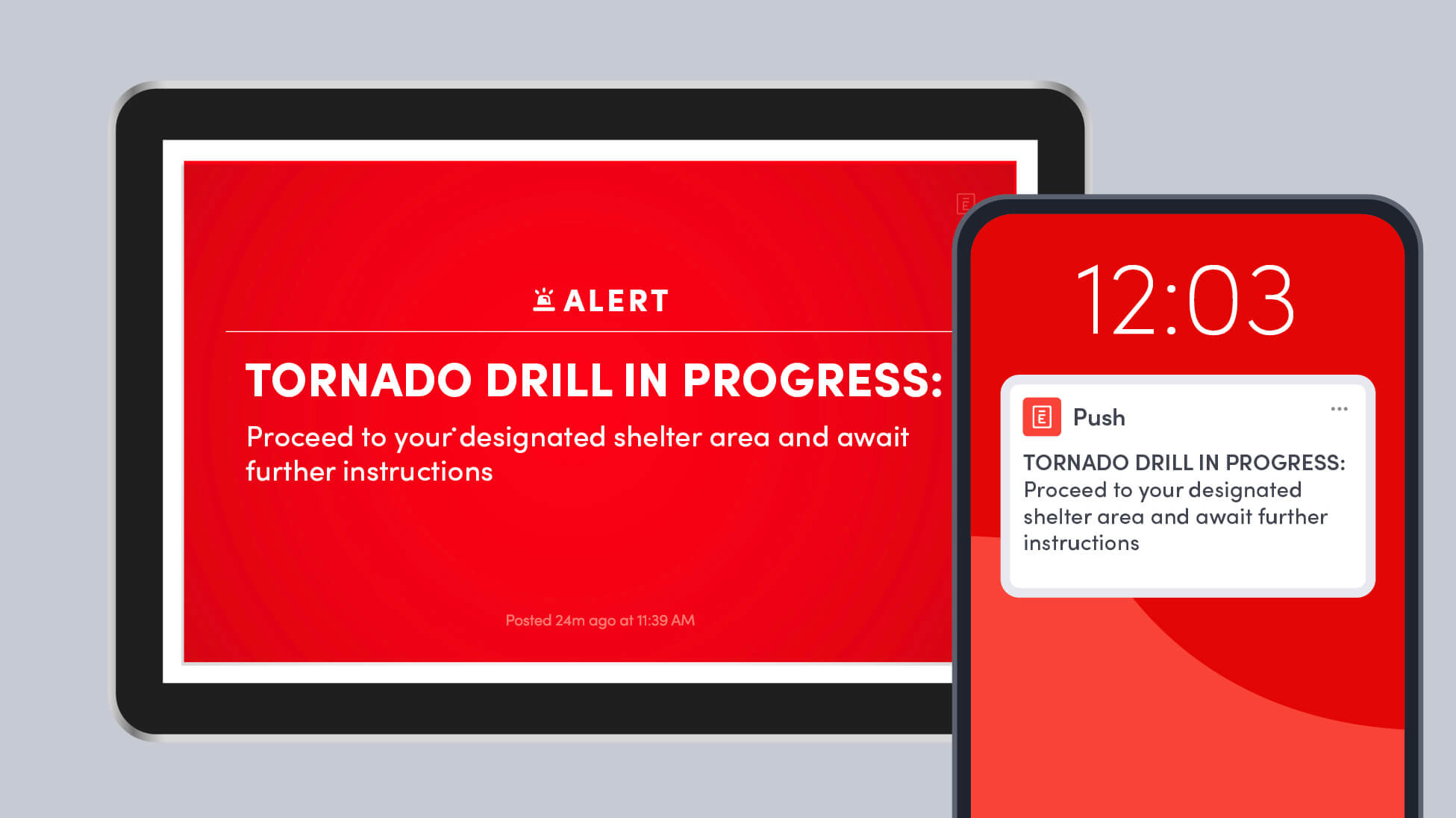
Learn how to run a workplace tornado drill, choose safer shelter areas, account for everyone onsite, and improve your emergency response plan.
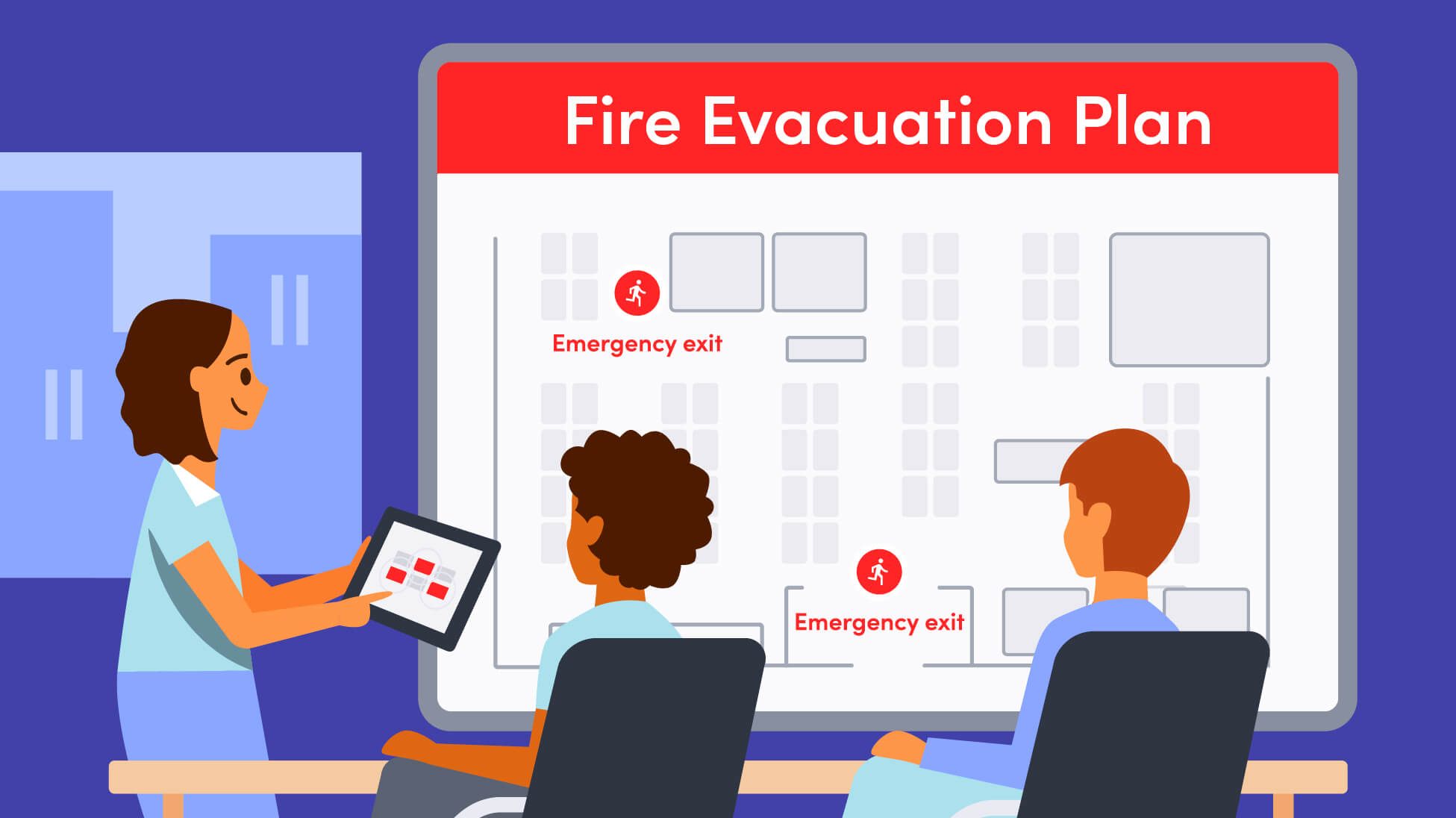
A strong fire evacuation plan goes beyond exit routes. Here’s how to plan for alerts, muster points, accountability, response roles, accessibility, and everyone who may be onsite.
This guide breaks down the key response roles every workplace should define, from incident leads and wardens to communications, accountability, and backup coverage.
Active shooter drills should build preparedness without creating unnecessary fear. Here’s how to test communication, decision-making, accountability, and response roles with a safer, more thoughtful exercise.

A successful fire drill is about more than getting people out fast. Here’s how to test evacuation routes, muster points, accountability, and communication so your team is better prepared when it counts.