

The 5-step guide to planning, running, and improving fire drills at work

1. Start with your evacuation plan
Before you put a drill on the calendar, make sure the basics of your evacuation plan are clear. OSHA requires covered emergency action plans to address evacuation procedures and exit routes, along with a way to account for employees after they evacuate.
For the drill itself, confirm:
- Evacuation routes. Make sure people know their primary and alternate exits.
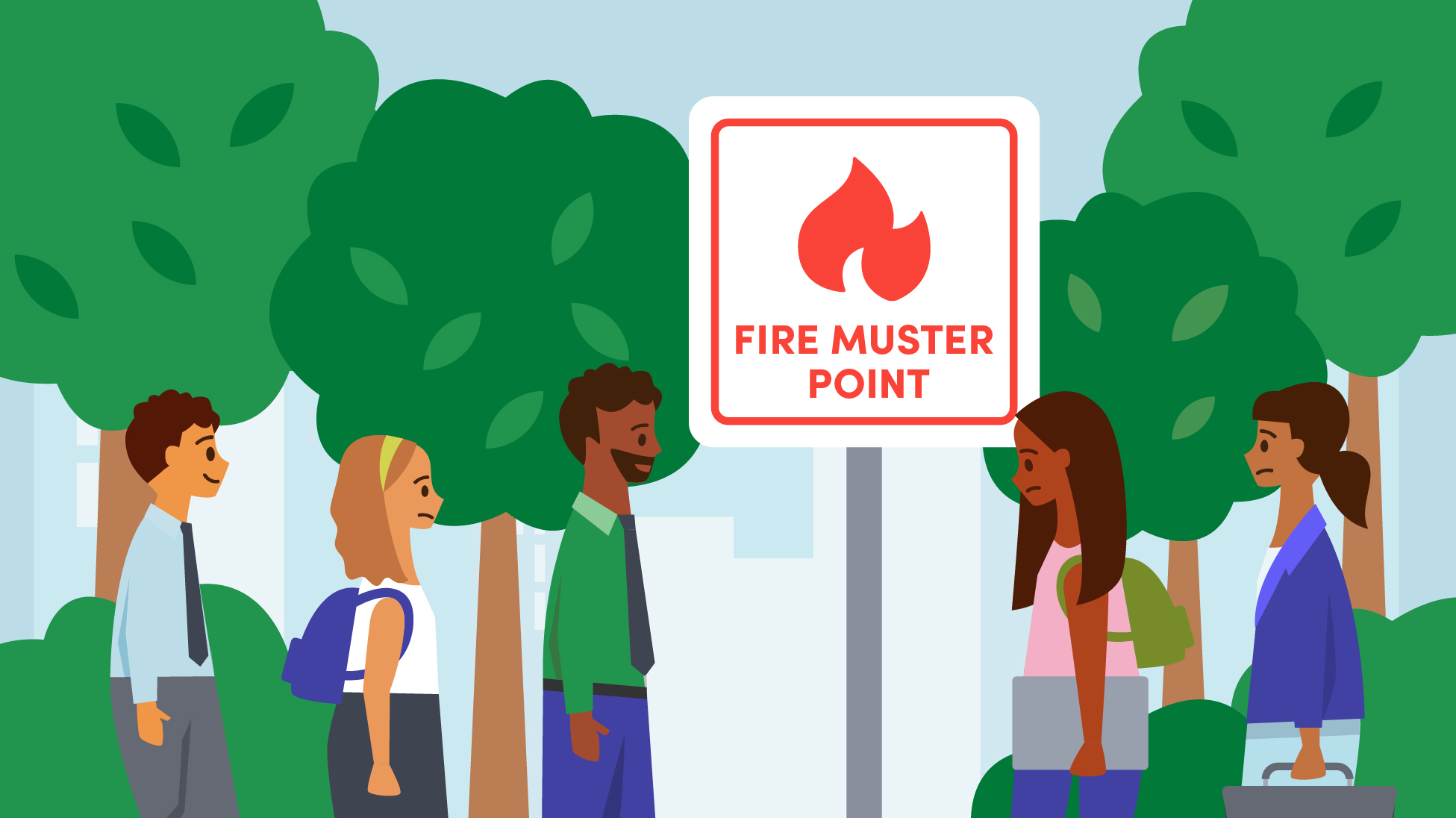
- Muster points. Choose safe assembly areas away from the building and emergency response activity.
- Building-specific procedures. Multi-floor and multi-building sites may need separate routes, muster areas, and response leads.
- Accessibility needs. Plan ahead for anyone who may need assistance evacuating, and assign trained people and backups to help.
- Critical operations. If certain employees have responsibilities before they can leave, those procedures should already be documented in your emergency preparedness plan.
Your drill should test the evacuation plan you would actually use, rather than creating a separate process that only works during practice.
2. Decide who needs to know about the drill
A fire drill can be announced in advance or conducted without sharing the exact time with the broader workforce. The right approach depends on what you’re trying to learn.
An announced drill can make sense when you’re introducing a new evacuation plan, training a new workforce, or working through accessibility and operational needs. Once people understand the procedure, withholding the exact timing can give you a better picture of how they respond without advance preparation.
Either way, the people responsible for running the drill should know what’s happening. Coordinate with building management, security, alarm monitoring providers, and emergency services as required before activating systems that could trigger a real response.
Be sure to keep the drill safe. There’s no need to block exits, simulate smoke, or introduce hazards to make the exercise useful.
3. Assign roles and plan your communication
Decide who’ll run the drill and who’ll handle each part of the response. Depending on your workplace, that might include:
- A drill coordinator overseeing the exercise
- Floor or building wardens helping people evacuate
- Muster leads managing accountability
- Designated people assisting anyone with mobility needs
- Someone authorized to send updates and the all-clear
Assign backups, too. A response plan that depends on one person being onsite is easy to break in a hybrid workplace.
Then, decide how you’ll communicate. Along with the building alarm, your incident management system should be able to send drill instructions and updates across channels people are likely to see. Digital signage can also reinforce evacuation messages for people in high-traffic or frontline areas.
4. Plan for everyone who might be onsite
A fire drill should account for the people who are actually there, including:
- Visitors and contractors. Include them in evacuation instructions and muster-point roll call. A current visitor log can help you identify who needs to be accounted for.
- People with accessibility or mobility needs. Test the assistance procedures in your emergency plan rather than assuming they’ll work when needed.
- Multi-floor sites. Assign wardens and accountability responsibilities by floor so one team isn’t trying to cover the entire building.
- Multi-building campuses. Give each building clear evacuation routes and muster areas, then decide how accountability rolls up across the site.
- Remote and hybrid employees. Base evacuation accountability on who is onsite that day. Someone working from home shouldn’t appear as missing simply because they’re on the employee roster.
This is where accurate workplace presence data becomes especially useful. Your muster list should reflect the population that was actually onsite when the drill began.
5. How to conduct a fire drill at work
Once the plan, roles, and communication procedures are set, you’re ready to run the drill.
- Start the drill. Activate the notification process in your fire drill plan. Clearly identify supplemental messages as a drill so no one confuses practice communications with a separate emergency.
- Evacuate the building. Employees, visitors, and contractors should follow their assigned routes to the appropriate muster point. Response leads should watch for blocked paths, congestion, hesitation, accessibility problems, or people using the wrong exits.
- Time the evacuation. Record when the drill begins, when the building is evacuated, and when accountability is complete. There isn’t one evacuation-time target that fits every workplace, so use the results to establish a baseline and identify avoidable delays.
- Run a digital roll call. At the muster point, confirm who has made it out, who has marked themselves safe, and who’s still unaccounted for. Include visitors and contractors so the count reflects everyone who was actually onsite.
- Investigate gaps without sending people back inside. If someone is missing, use your roster, two-way communication, and response procedures to determine their status. During a real fire, employees should never re-enter a building to search for someone unless they are trained and authorized to do so.
- Send the all-clear. Keep everyone at the muster point until the drill coordinator or other designated authority ends the exercise. Make it clear when people can return to the building.
- Debrief and document. Review evacuation times, missed alerts, accountability gaps, accessibility issues, visitor procedures, and anything that caused confusion. Record what happened, what needs to change, and who owns each follow-up action.
The most useful result isn’t a fast evacuation time on its own. It’s knowing where the process slowed down, who was difficult to account for, and what you can fix before the next drill.
{{protip-1}}
Workplace fire drill checklist
That was a lot of information! Don’t worry, though. Below, we’ve provided a fire drill checklist to help you keep the drill organized, from planning through follow-up.
Before
- Confirm the drill date, time, and scope
- Review evacuation routes and muster points
- Assign drill leads, floor wardens, muster leads, and backups
- Confirm procedures for people who may need evacuation assistance
- Coordinate with building management, alarm monitoring, and other relevant parties
- Check that your onsite roster includes employees, visitors, and contractors
- Prepare the drill notification, updates, and all-clear message
- Decide which times and observations you’ll record
During
- Start the alarm and communication process
- Record the drill start time
- Observe evacuation routes for delays or confusion
- Direct everyone to the correct muster point
- Run roll call and identify anyone unaccounted for
- Confirm everyone’s status
- Record when evacuation and accountability are complete
- Issue the all-clear
After
- Debrief with response leads
- Document issues and lessons learned
- Assign owners to follow-up actions
- Update your emergency plan if needed
- Save the drill record for future review
Make fire drills easier to run with Envoy Response
During a fire drill, your team needs to reach everyone, get them out, confirm who made it to the muster point, and leave with a clear record of what happened. Envoy Response brings each of these critical workflows together.
- Send evacuation alerts quickly. Use Envoy to instantly reach affected employees, visitors, and contractors across multiple channels as part of your drill communication plan. Workplace screens can reinforce those instructions for people who may not be checking a phone or computer.
- Know who was actually onsite. Envoy maintains a current record of checked-in guests, while workplace presence data helps response teams build a more accurate picture of who needs to be accounted for.
- Run a digital roll call. People can mark themselves safe while response teams track status in real time and identify anyone who is still unaccounted for.
- Keep communication open. Two-way chat lets response teams follow up with people directly if their status is unclear or they need assistance.
- Document the drill automatically. Notifications, responses, status changes, and key actions are captured in a timestamped record teams can use for after-action review, reporting, and compliance needs.
For a broader look at preparing your workplace for different types of incidents, see our guide to building an emergency preparedness plan.
Ready to learn more about Envoy Response? Schedule a demo today.
Workplace fire drill FAQs
What is a fire drill at work?
A workplace fire drill gives everyone onsite a chance to practice evacuating the building and meeting at a designated muster point. It also helps response teams test alerts, evacuation routes, roll call, and other parts of the fire response plan.
How do you conduct a fire drill at work?
Start by reviewing your evacuation plan, assigning response roles, and confirming how people will be alerted. During the drill, evacuate everyone to designated muster points, time the process, account for everyone onsite, issue an all-clear, and document what you learned.
How often should workplaces conduct fire drills?
There’s no single schedule for workplace fire drills. OSHA recommends running them often enough to keep employees prepared, while the National Fire Protection Association’s Life Safety Code and local fire codes may set specific requirements based on building or occupancy type. Your drill schedule should also support your broader emergency management program and evolve as your workplace, risks, or procedures change.
Should employees know about a fire drill in advance?
They can, but they don’t always need to know the exact time. Announced drills can be useful for training or introducing a new procedure. Once people know the process, keeping the exact timing limited to those running the drill can give you a better test of normal response. Coordinate with anyone who needs advance notice for safety or operational reasons.
How long should a workplace fire drill take?
There is no universal evacuation time that works for every building. Record how long it takes to evacuate and account for everyone, then use those results to identify delays and measure improvement over time.
What happens at a muster point during a fire drill?
Once people reach the muster point, response teams account for everyone who was onsite and identify anyone whose status is still unknown. People should stay at the muster point until the designated lead gives the all-clear.
How should visitors and contractors be handled during a fire drill?
Visitors and contractors should follow the same evacuation instructions as everyone else onsite and be included in roll call at the muster point. Keeping an up-to-date visitor record makes it easier to know who needs to be accounted for.
Do remote employees need to participate in a workplace fire drill?
Remote employees don’t need to evacuate a building they aren’t in. For hybrid workplaces, your accountability process should distinguish between people working remotely and those who were onsite when the drill started.
Want to test the plan without running a full drill? A tabletop exercise can help your team walk through roles, decisions, and communication before putting the plan into action.
Read more

In this guide, we’ll break down how cloud digital signage works, how it compares with on-premise signage, cost factors, and what to look for in a solution.

Learn how to support ITAR compliance with visitor screening, access approvals, onsite controls, and records that document each visit.
Compare leading mass notification vendors, their best-fit use cases, and key tradeoffs. Learn what to evaluate before choosing a system.
New Envoy research reveals where physical security gaps emerge and whether organizations can prove their controls are working.
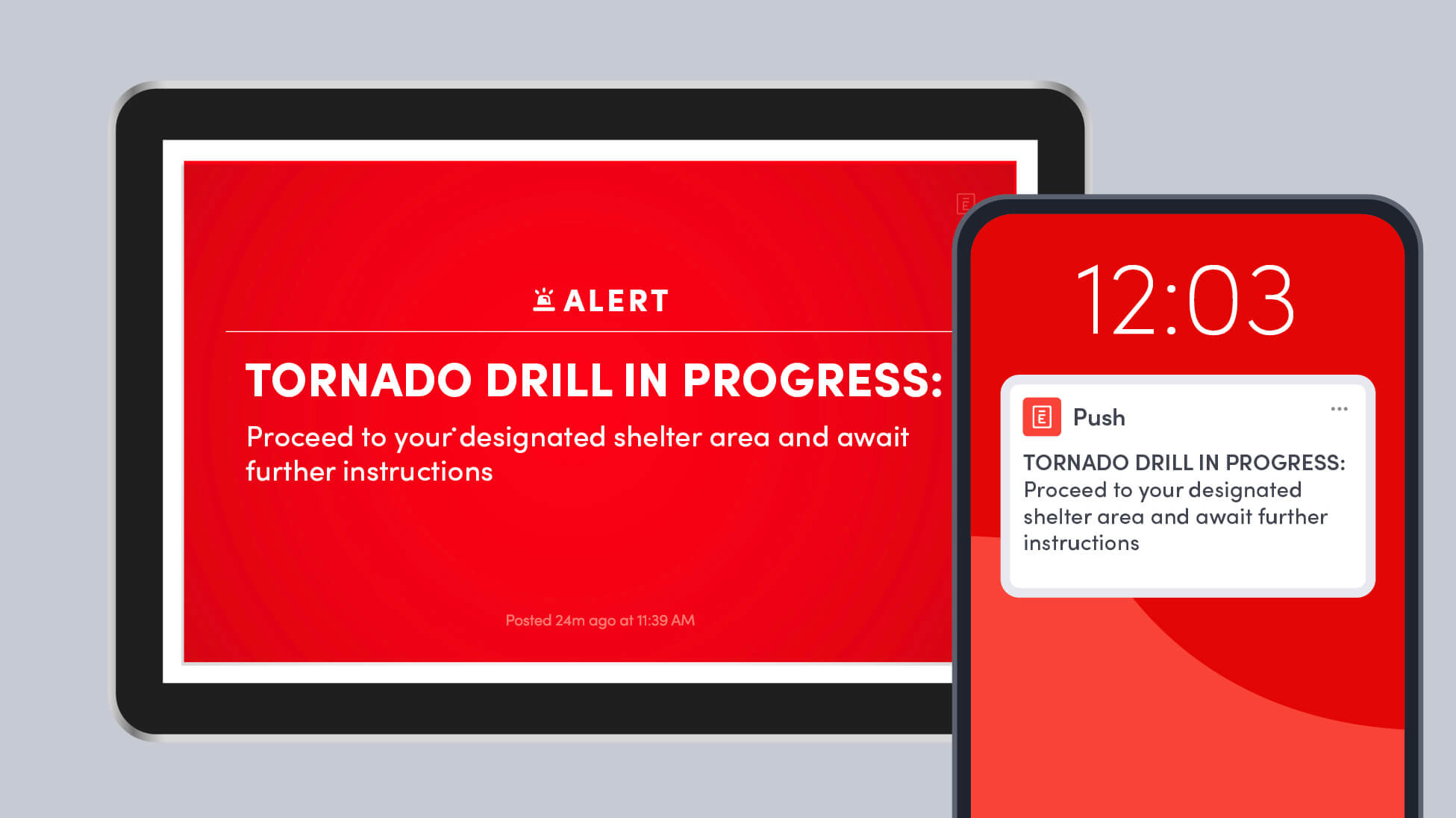
Learn how to run a workplace tornado drill, choose safer shelter areas, account for everyone onsite, and improve your emergency response plan.
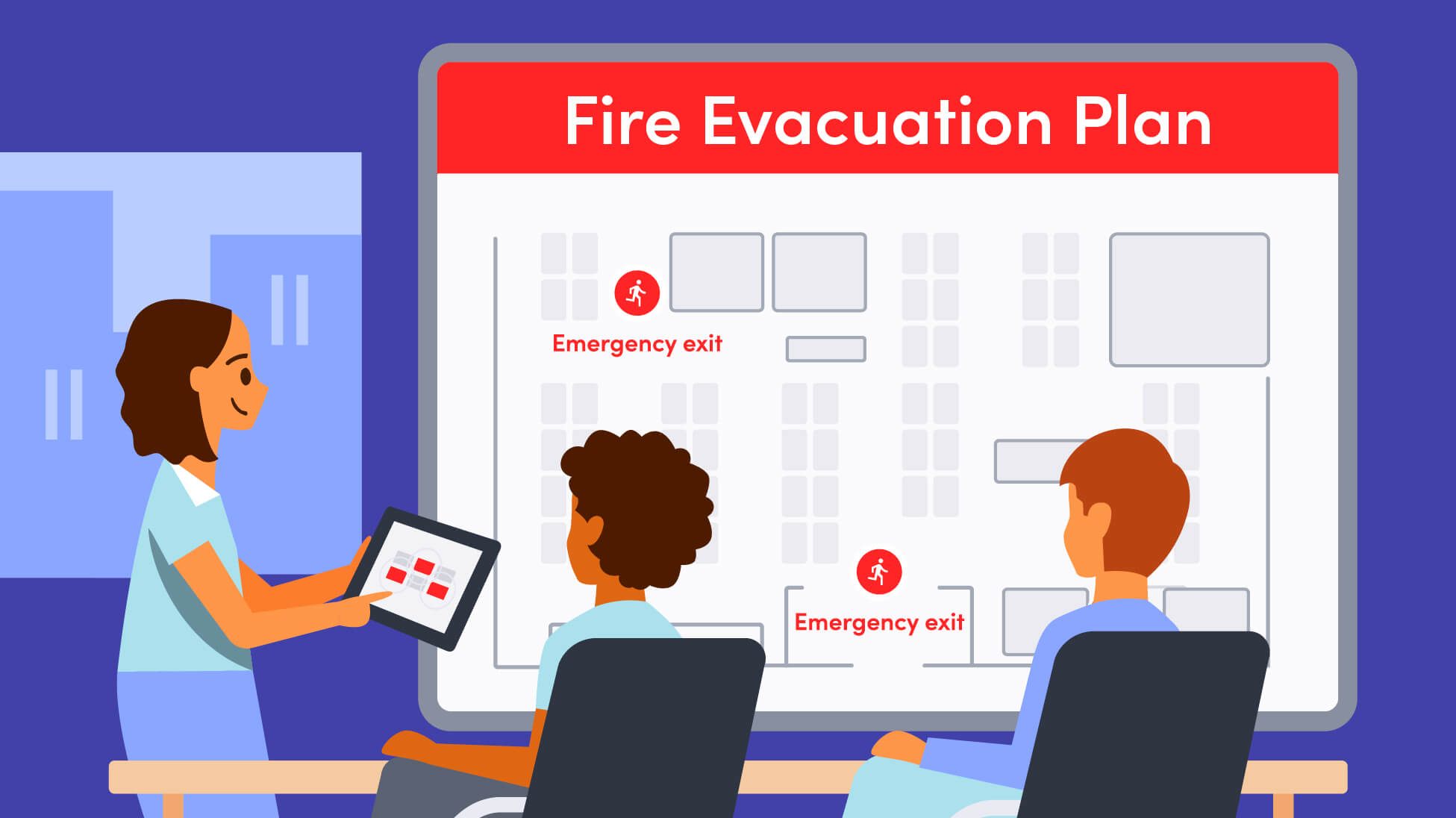
A strong fire evacuation plan goes beyond exit routes. Here’s how to plan for alerts, muster points, accountability, response roles, accessibility, and everyone who may be onsite.