

Where office life is thriving: City-level insights from 2025 so far



As we approach midyear, office attendance trends across major U.S. cities are painting a tale of two return-to-office realities. From January through April 2025, some metro areas have surged with renewed workplace energy, while others are seeing foot traffic plateau.
So, where is office life booming — and where is it progressing at a slower pace?
Cities leading the office revival
Several cities have seen a remarkable surge in total office foot traffic, signaling a strong push toward in-person collaboration and revitalized downtowns. Whether driven by policy, business growth or cultural shifts, these metros are leading the pack:
- Austin: 55.20% increase
- Chicago: 54.55% increase
- Atlanta: 50.55% increase
- San Diego: 40.28% increase
- New York City: 36.79% increase
- Portland: 34.80% increase
- Seattle: 32.27% increase
- Boston: 30.71% increase
- San Francisco: 16.76% increase
- Los Angeles: 16.63% increase
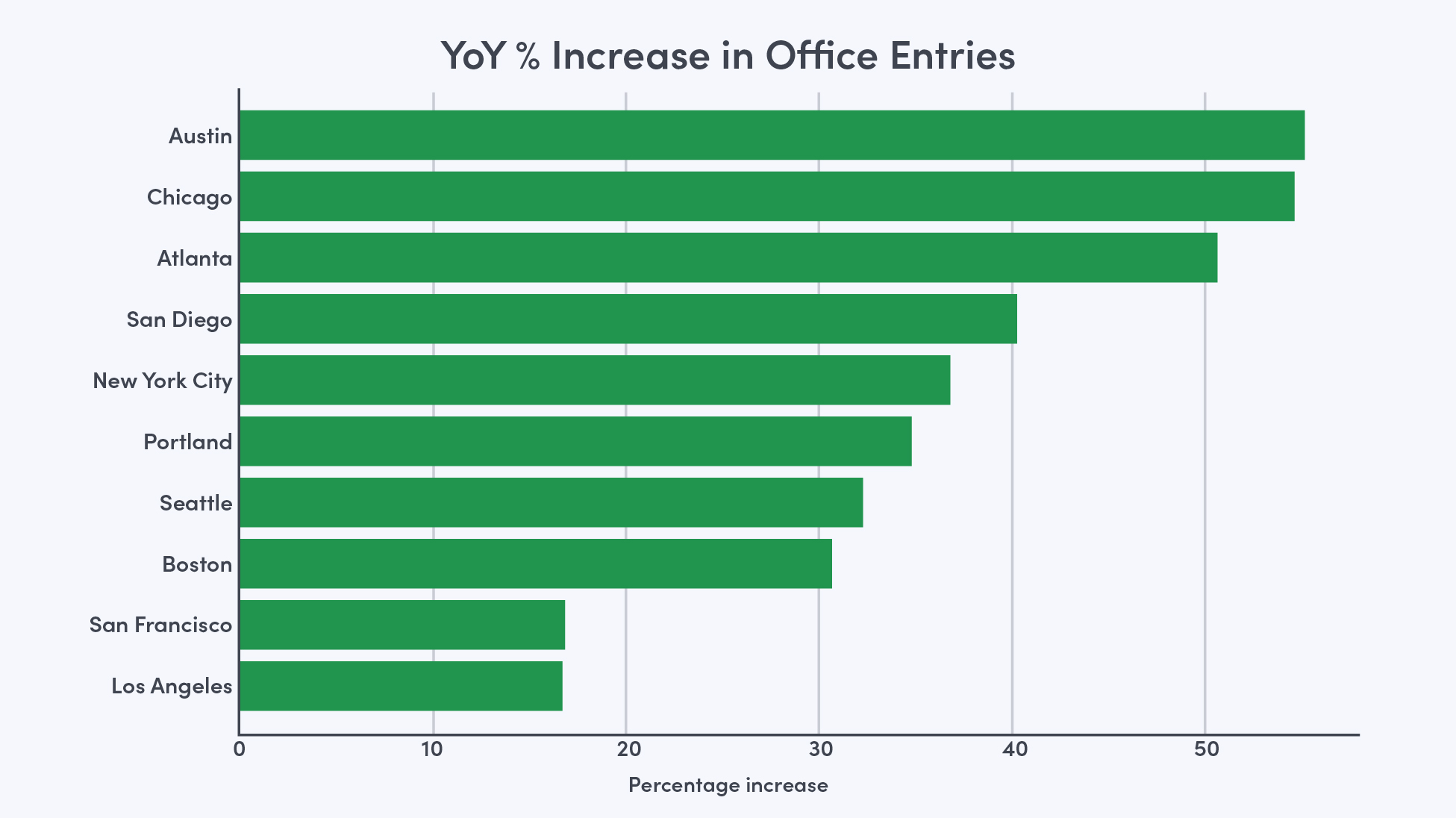
Cities like Austin and Chicago stand out with more than 50% year-to-date growth, underscoring a sharp shift back toward in-office engagement in these regions. These jumps may reflect a mix of stronger return-to-office policies, robust urban revitalization efforts and growth in industries favoring in-person work.
Cities seeing slower growth
Not all cities are experiencing the same rebound. A handful of metros are seeing marginal gains or even decreases in office entries from January through April, signaling either a slower transition or continued commitment to hybrid and remote models.
- Dallas: -2.16%
- Las Vegas: -1.01%
- Houston: -0.91%
- Oakland: -0.06%
- Indianapolis: 4.95%
- Denver: 7.73%
- Washington D.C.: 8.88%
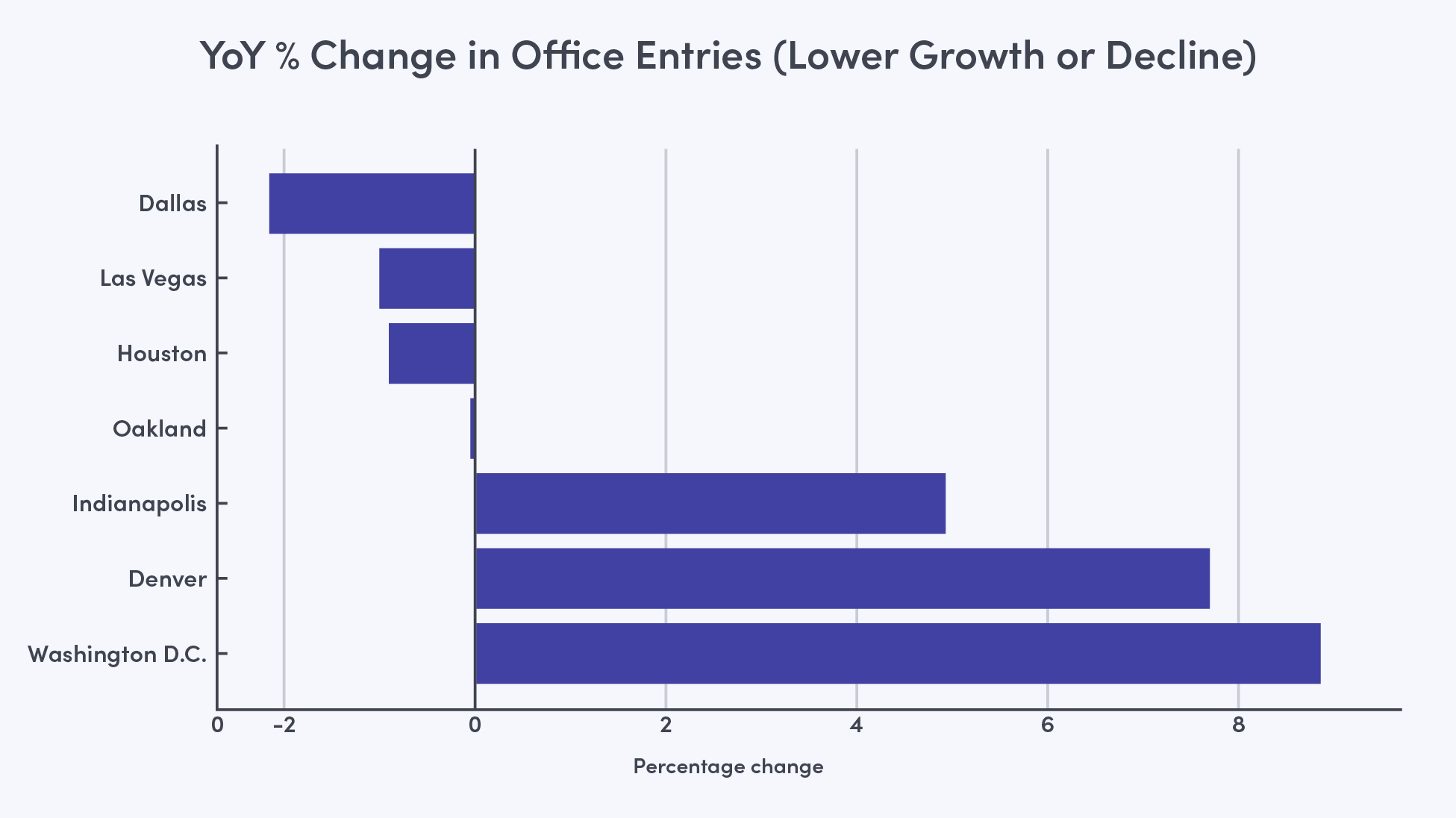
Cities like Oakland and Houston are seeing only marginal change. These numbers don’t necessarily suggest stagnation. Rather, they underscore the highly localized nature of workplace recovery.
A tale of two recoveries
The disparities between booming and slow-growth cities highlight just how uneven the return to office has been. Factors like local industry mix, cost of living, real estate incentives and even public transit access are all shaping how (and how quickly) office buildings are filling up.
As we head deeper into 2025, these trends will continue to shift. The cities that thrive will likely be those that invest in both flexible policies and compelling, people-first workplaces that give employees a reason to be there.
Stay tuned as we continue tracking city-by-city momentum in the modern workplace.
Read more

Envoy’s September 2026 releases help teams manage visitors with less manual work, streamline compliance reporting, and keep access systems in sync.
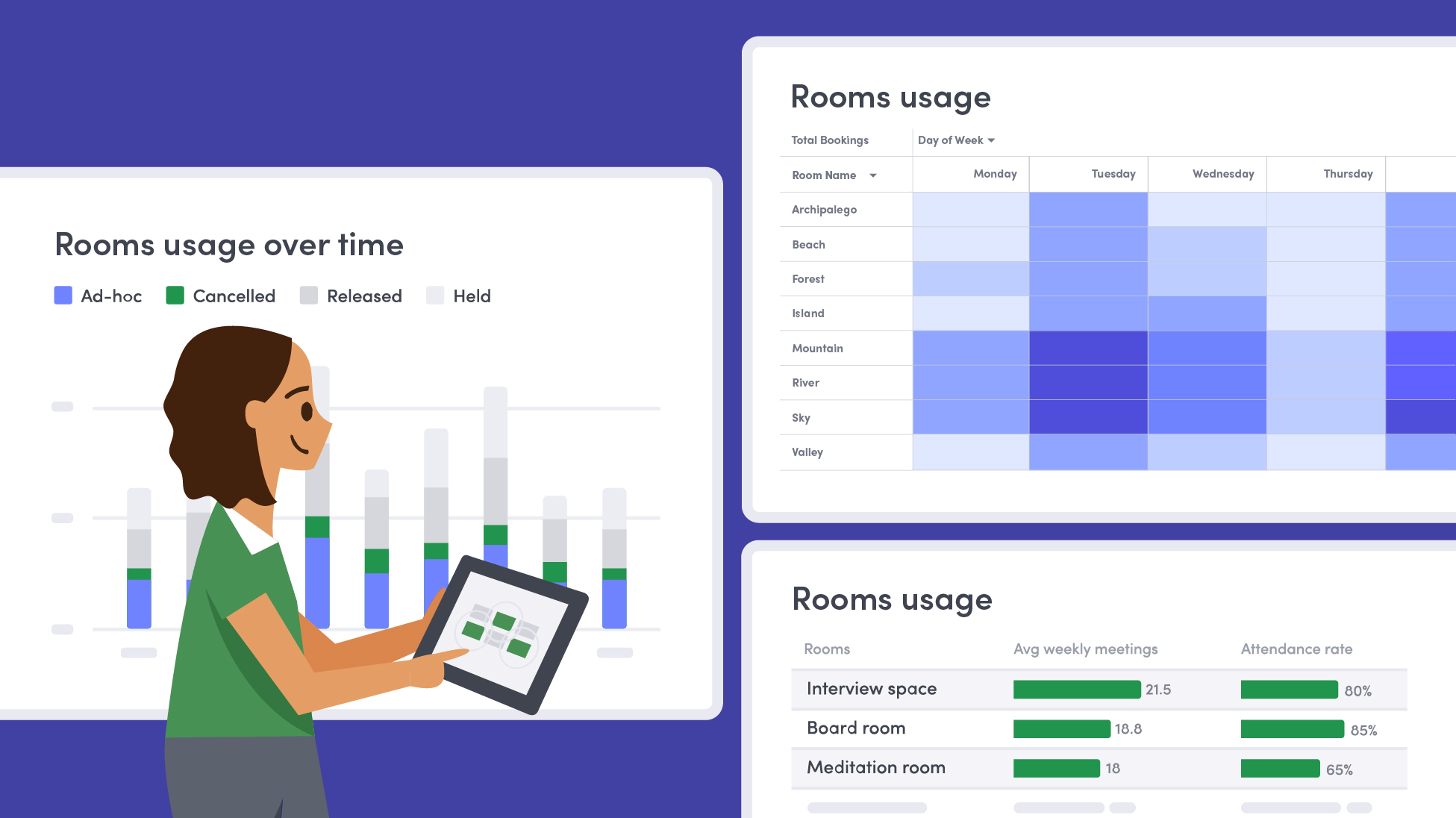
Learn how to measure conference room utilization, occupancy, no-shows, booking density, and more, and use the data to make smarter space decisions.
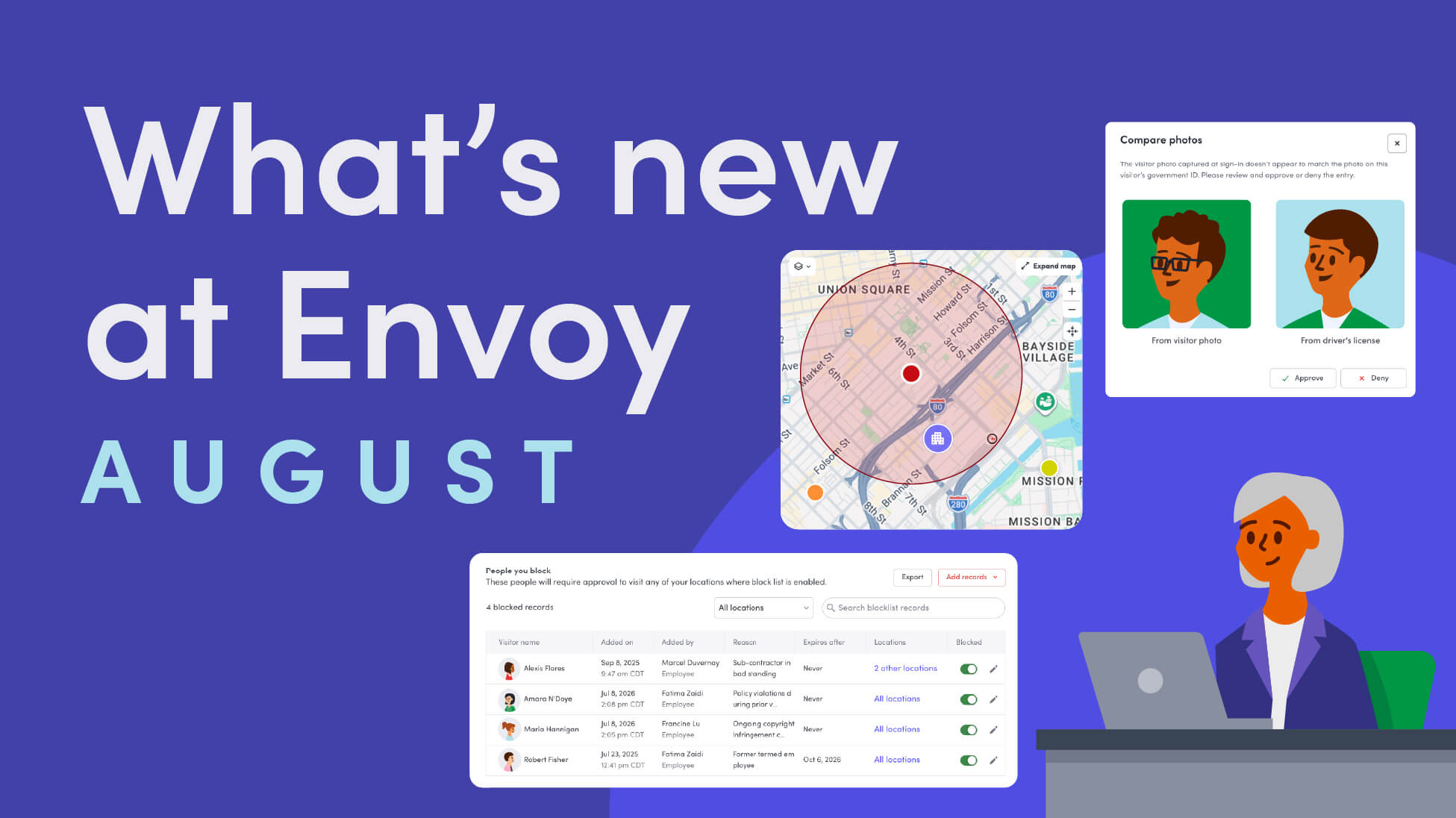
Envoy’s August 2026 releases introduce Envoy Response for emergency management, bringing emergency response into the same platform you already use for visitor and workplace management.

Envoy's July 2026 releases focus on workplace intelligence features like HRIS directory sync, workplace map file exports, and mailroom management improvements through the Developer API.

Envoy data across 300+ U.S. metros reveals the one morning the World Cup actually emptied the office, and it wasn't when you'd think.

Envoy Academy is back with a full refresh. Still free, still on-demand, and organized by role so admins get fluent in Envoy fast.