

What is hybrid work: advantages and disadvantages?


Hybrid work has reshaped how—and where—work happens.
Instead of choosing between fully remote or fully onsite work, many organizations now blend both. Employees split time between home and the workplace, creating a model designed around flexibility, productivity, and connection.
But hybrid work isn’t a single policy or schedule. Every organization defines it differently based on business needs, team collaboration, and workplace goals.
In this post, we’ll explain:
- What hybrid work is
- Why employees want hybrid work
- The advantages and disadvantages
- Common hybrid schedules
- Whether hybrid work is going away
- Best practices and technology needed to make hybrid work successful
What is hybrid work?
Hybrid work is a flexible work model where employees divide their time between working remotely and working onsite. Instead of requiring them to be in one location every day, hybrid organizations give people flexibility in where and sometimes when they work.
The goal isn’t simply remote work with onsite days added back in. Hybrid work redefines the role of the workplace itself—shifting them toward collaboration, connection, and intentional in-person time.
Why do employees want hybrid work?
Hybrid work has become the preferred model for many employees because it combines flexibility with human connection. Research consistently shows that workers value:
- Greater control over their schedules
- Reduced commuting time
- Improved work-life balance
- Opportunities for in-person collaboration
Employees don’t want to abandon the workplace—they want the choice of when it adds value.
Hybrid work gives people the autonomy to focus at home and collaborate onsite, which often leads to higher engagement and lower burnout.
What are the advantages of hybrid work?
1. Employees work where they’re most productive
Hybrid schedules allow employees to match their environment to their work. For example, deep focus may happen at home, while collaboration happens in person.
2. Better work-life balance
Flexibility makes it easier to integrate personal responsibilities into the workweek without sacrificing performance.
3. Access to a broader talent pool
Organizations can recruit beyond geographic limits while still maintaining a workplace culture.
4. More efficient real estate planning
Hybrid work helps companies right-size office space and invest in workplaces employees actually want to use.
What are the disadvantages of hybrid work?
Hybrid work introduces new operational challenges that organizations must intentionally manage.
- Collaboration gaps. Teams may miss spontaneous interactions if schedules don’t align. This makes visibility into coworkers’ schedules to coordinate is critical.
- Operational complexity. Hybrid workplaces require clear policies, communication norms, and workplace technology.
- Not every role supports hybrid work. Industries like healthcare, education, and manufacturing often require physical presence for roles that depend on hands-on work, in-person service delivery, or access to specialized equipment and facilities.
Hybrid work succeeds when organizations design systems—not assumptions—around flexibility.
Is hybrid usually 2 or 3 days in the office?
For many organizations, yes.
Research shows employee engagement often peaks when people spend two to three days per week onsite. This balance preserves flexibility while maintaining collaboration, culture, and mentorship opportunities.
That said, there’s no universal rule. It depends on team workflows, role requirements, office purpose, and employee preferences. Hybrid work works best when companies define why employees come onsite—not just how often.
What types of hybrid work schedules exist?
Hybrid work isn’t one-size-fits-all. Common hybrid schedules include:
- Hybrid at-will. Employees choose when to come into the office.
- Structured hybrid (split-week). Organizations assign specific in-office days company-wide or by team.
- Manager-scheduled hybrid. Managers coordinate onsite time based on team needs.
- Hybrid mix. A combination of flexibility and structured expectations.
The right model aligns business goals with employee autonomy. It’s simple: when employees can work in a format that fits them best, they’re more likely to be productive.
Is hybrid work going away?
No. Hybrid work is becoming the long-term standard for knowledge work. While some companies adjust policies over time, most organizations have learned that flexibility improves retention, recruiting, and employee satisfaction.
Hybrid work continues to evolve as companies refine the purpose of their office, their workplace tech stack, collaboration practices, and space utilization strategies.
In short, hybrid work is not disappearing, it’s maturing into a more intentional way of working.
How has hybrid work changed the purpose of the office?
Hybrid work shifted the workplace from a place people must work to a place people choose to work. The best run workplaces focus on:
- Collaboration
- Team connection
- Innovation
- Social interaction
- Intentional in-person moments
Successful hybrid workplaces design environments employees actively want to work at.
How do you successfully adopt a hybrid work model?
Hybrid work requires alignment across people, processes, and technology.
Communicate clearly with employees
Gather input before rolling out policies and continue collecting feedback afterward.
Work cross-functionally
HR, IT, workplace, and security teams must collaborate to support hybrid operations.
Design intentional workplaces
Create environments that support different work styles—from focus zones to collaboration spaces.
Maintain culture across locations
Hybrid organizations invest in both onsite and remote experiences.
What technology do you need to support hybrid work?
Hybrid work depends on workplace technology that connects people, spaces, and data. Key tools include:
- Desk and room booking. Helps employees reserve workspaces before arriving onsite.
- Workplace scheduling tools. Provide visibility into who’s coming into the office and when.
- Office wayfinding. Makes it easy to find coworkers, rooms, and available desks.
- Workplace analytics. Gives leaders insight into space usage and workplace performance.
If you’re implementing a hybrid work model, remember: technology turns hybrid work from a policy into an operational system.
—
Hybrid work is no longer an experiment. It’s a lasting evolution of how work happens. Organizations that succeed with hybrid work focus on flexibility, intentional workplaces, and technology that supports both employees and operations.
When done well, hybrid work strengthens productivity, improves workplace experience, and helps companies build workplaces people genuinely want to be part of.
Ready to dive deeper into maximizing your space in the era of hybrid work? Read our step-by-step guide to occupancy planning for your hybrid workforce.
Read more
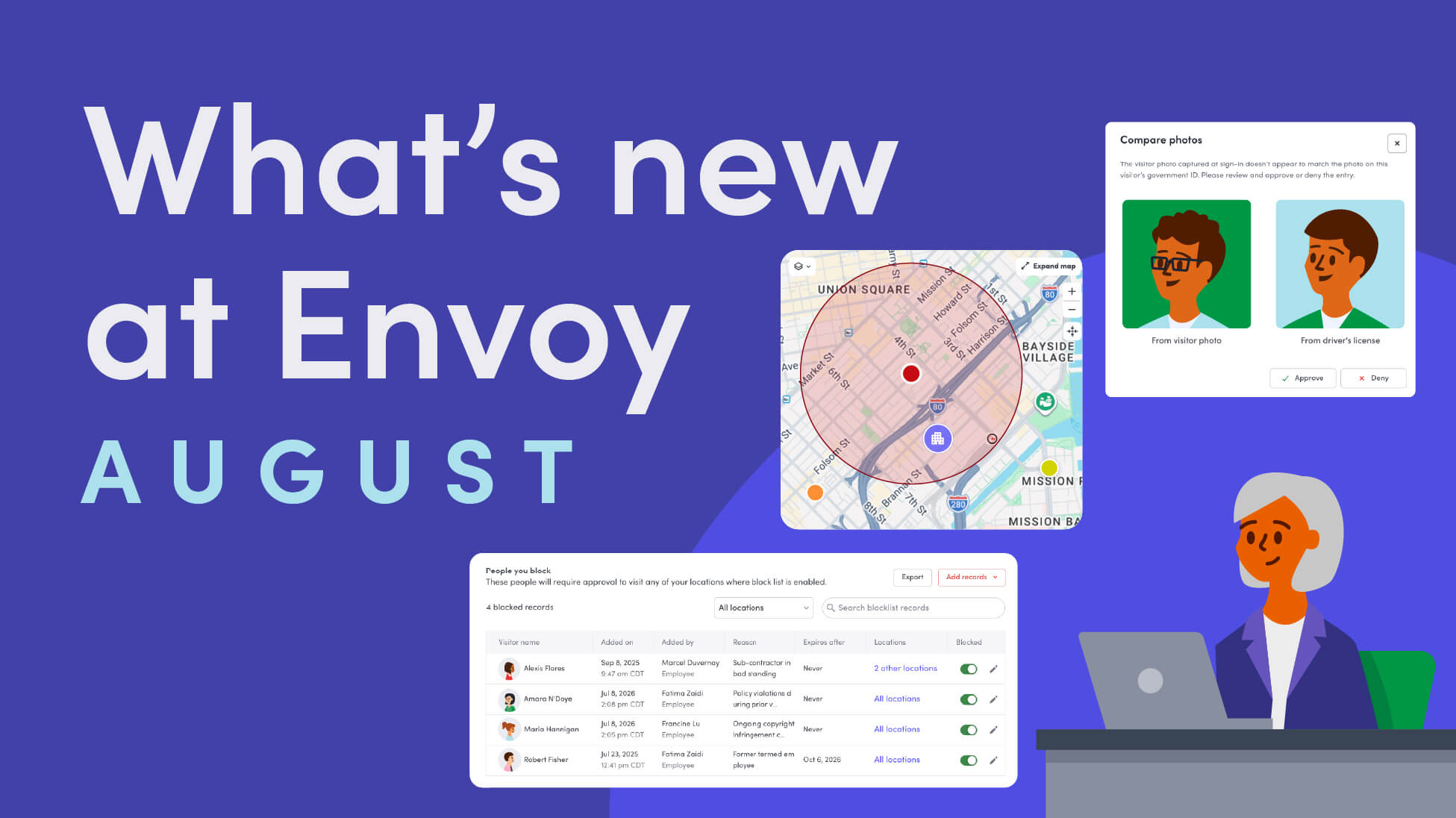
Envoy’s August 2026 releases introduce Envoy Response for emergency management, bringing emergency response into the same platform you already use for visitor and workplace management.

Envoy's July 2026 releases focus on workplace intelligence features like HRIS directory sync, workplace map file exports, and mailroom management improvements through the Developer API.

Envoy data across 300+ U.S. metros reveals the one morning the World Cup actually emptied the office, and it wasn't when you'd think.

Envoy Academy is back with a full refresh. Still free, still on-demand, and organized by role so admins get fluent in Envoy fast.
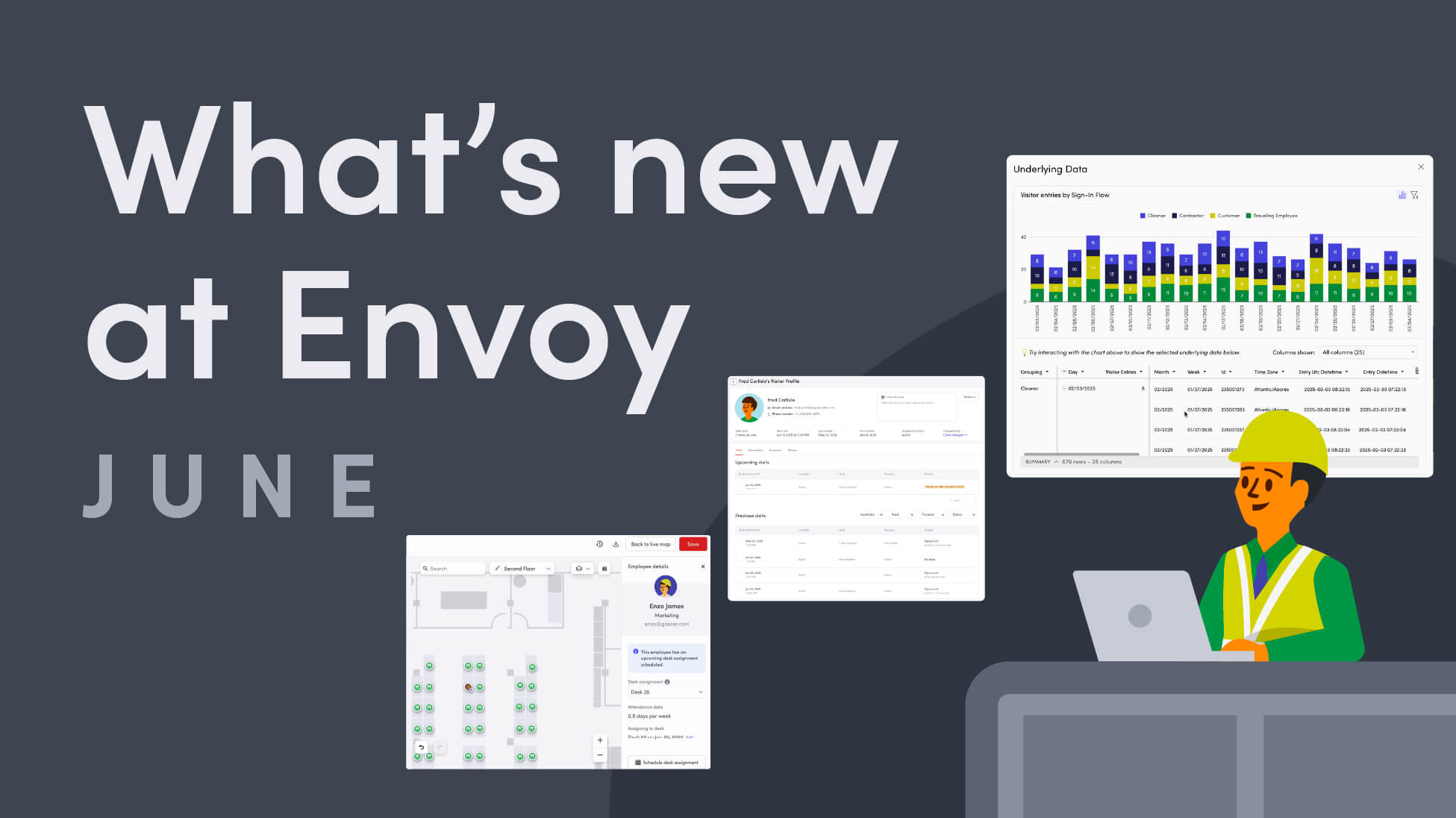
Envoy's June 2026 releases help you close gaps between physical and digital systems with smarter visitor data controls, seamless move management, and real-time workplace intelligence.

Envoy's May 2026 updates give workplace teams full-lifecycle emergency response, real-time integration visibility, and more efficient move management.